



What to Expect During Your Commercial Sign Installation in Fort Worth
Key Takeaways
Sign installation is the final on-site phase of a commercial signage project: mounting, electrical hookup, and inspection, after design, permitting, and fabrication are already done.
A single storefront sign usually installs in a single day; monument signs, pylon signs, and multi-building projects take longer and often run in phases.
Electrical work on an illuminated sign must be performed by a Texas-licensed electrical sign contractor, not by the general installation crew.
Expect some disruption on install day: a safety perimeter, possible parking or lane impact, and a lift or crane on site for anything mounted above reach.
A finished installation should end with a city inspection and as-built photos and warranty documentation for your files, not just a sign on the wall.
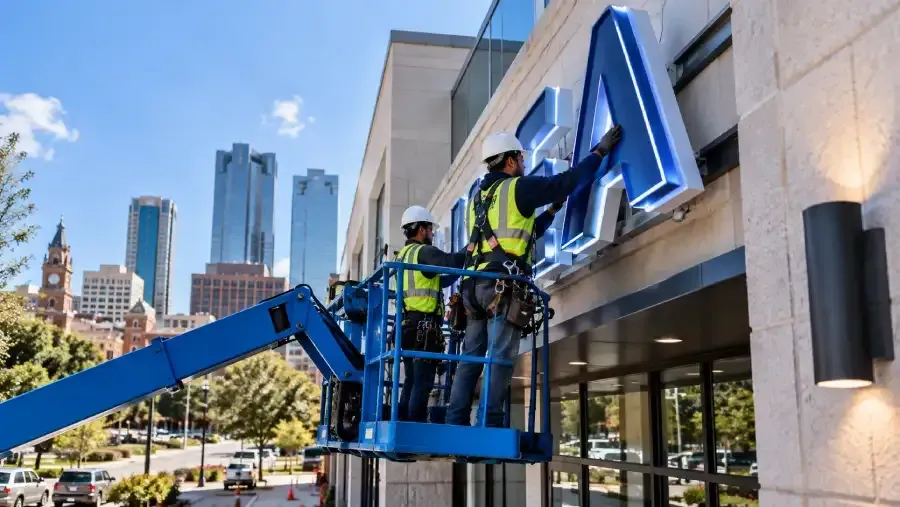
By the time a sign crew shows up at your building, the hardest part of the project is usually already behind you. Sign installation is the on-site phase of a commercial signage project where the fabricated sign is mounted, wired, and inspected, the step that turns approved drawings and finished letters into something customers actually see. Design, permitting, and fabrication happen mostly off-site and out of sight; installation is the one phase a business owner actually watches, and it is also the phase most guides skip past with a single sentence. This post walks through what actually happens on install day for a Fort Worth commercial sign, from the crew's arrival to the inspection that closes out the project, so you know what to expect and what questions to ask before the truck pulls up.
Before Installation Day: What Already Has to Happen
Installation is the last of several steps in a commercial sign project, not the first. By the time a crew arrives on site, the sign has already gone through a site survey, a zoning and landlord-criteria review, design and engineering, permit filing, and fabrication. Skipping or rushing any of those earlier steps is the most common reason an installation gets delayed or has to be rescheduled once the crew is already on site. Our Fort Worth sign company page walks through all seven steps of that process in detail if you want the full picture before install day; this post picks up where that one leaves off, at the point the sign actually goes up.
What Actually Happens on Installation Day
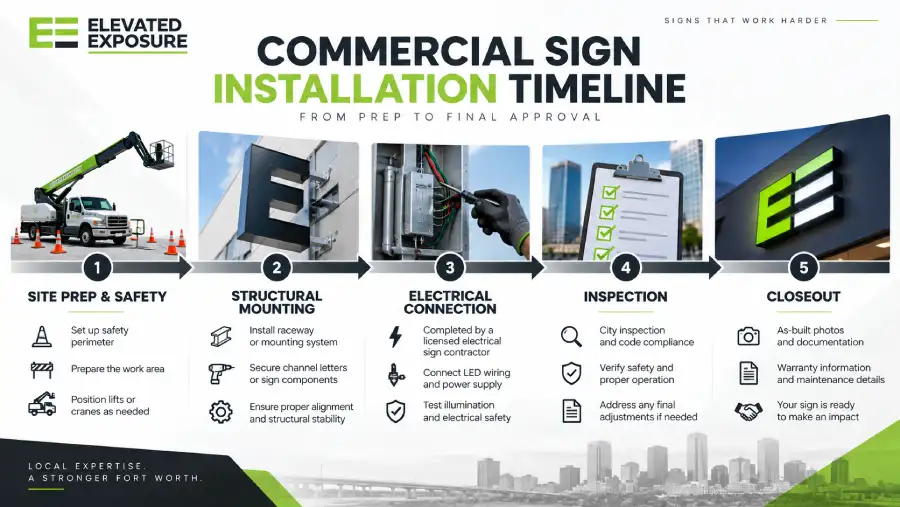
Installation day looks different for a small interior sign than it does for an illuminated pylon sign, but the sequence follows the same general pattern for almost every commercial project.
Site Prep and Safety Perimeter
The crew arrives with the fabricated sign, its mounting hardware, and whatever equipment the mounting height requires, a ladder for a storefront sign, a lift or crane for anything above the second story or set back from the building. Before any mounting starts, the crew sets up a safety perimeter around the work area. For a ground-level storefront, that is usually cones and tape along the sidewalk. For a pylon sign near a drive lane or a building sign requiring a lift near a parking area, it can mean temporarily blocking a section of parking or, for a downtown site, coordinating a lane closure and traffic control plan with the city in advance.
Mounting and Structural Installation
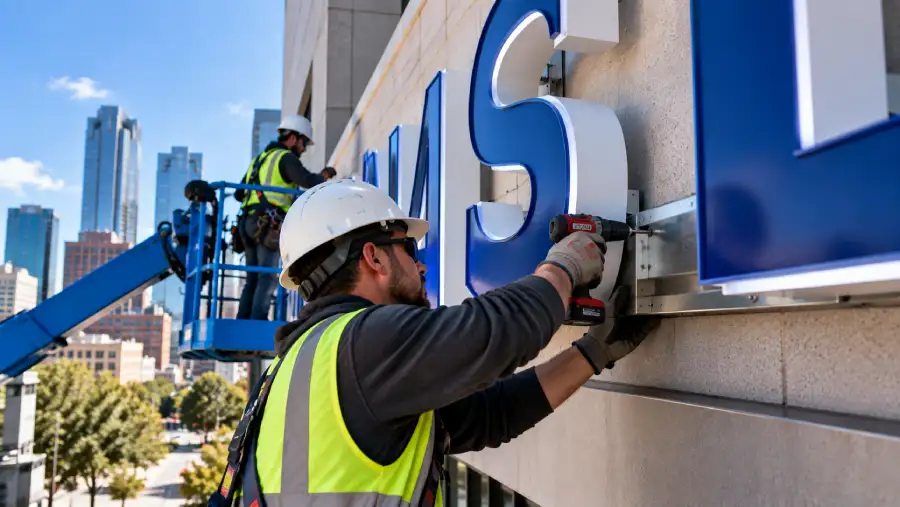
Mounting method depends entirely on sign type. Channel letters typically mount to a raceway or are flush-mounted directly to the facade with concealed fasteners into verified structural backing. Monument and pylon signs need their foundation and footing already cured from an earlier site visit, since the sign itself cannot go up until that concrete work has had time to set. Post and panel signs and interior dimensional letters are more straightforward, mechanical mounting with no structural engineering involved. Whatever the sign type, the crew confirms the mounting substrate can actually bear the sign's weight and wind load before final fasteners go in, not after.
Electrical Hookup
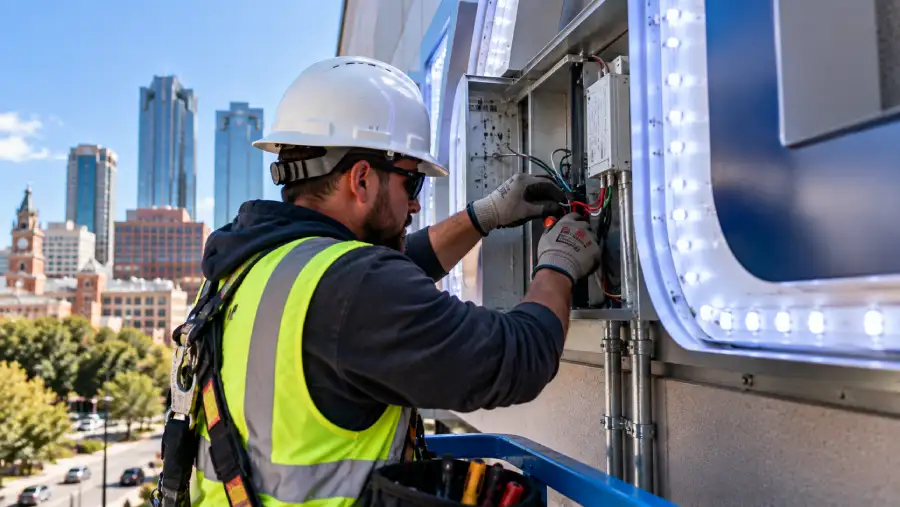
Any illuminated sign requires electrical work performed by a Texas-licensed electrical sign contractor, not the general installation crew. This is a legal requirement, not a preference, and it is worth confirming directly with any sign company you're evaluating: ask who performs the electrical connection and whether that person carries a Texas electrical sign contractor license. On most projects, the electrical contractor coordinates a specific time window with the rest of the install so the raceway or conduit is in place before they connect power, keeping the whole installation to a single visit instead of two separate trips.
Timeline: How Long Installation Actually Takes
A single illuminated channel letter set or a storefront cabinet sign typically installs in a single day, often in a matter of hours once the lift is on site. A monument or pylon sign takes longer because of the foundation work that has to happen and cure before the sign itself goes up, so plan on the installation being one visit within a project timeline that runs longer overall. Multi-building or multi-tenant projects, like a shopping center replacing several tenant panels on a shared pylon, are usually phased across more than one day so each business stays open and accessible throughout. Weather is the most common reason an installation date moves. Crane and lift work does not happen safely in high wind, and exterior electrical connections do not happen in rain, so build a few days of flexibility into any hard deadline tied to an opening or an event.
Common Disruptions to Plan For
None of these should derail your business for the day, but each one is worth planning around instead of finding out about on site.
Parking or lane impact near the sign location while a lift or crane is set up, particularly for pylon signs and building-mounted signs above the first story.
Noise from drilling, cutting, or lift operation during the mounting window, usually a few hours rather than all day.
A brief power interruption if the electrical connection ties into an existing circuit rather than a dedicated one.
Reduced visibility of your current signage or storefront while the old sign comes down and the new one goes up, if this is a replacement rather than a new installation.
A city inspector visit scheduled separately from the installation crew, which can add a short gap between the sign going up and the project being formally closed out.
Inspection and Closeout: What You Should Receive
A finished installation is not the same as a closed-out project. After the sign is mounted and, if applicable, wired, the city inspects the completed work against the approved permit before the project is considered done. Once that inspection passes, you should receive as-built photographs of the installed sign and warranty documentation for your property file, not just a verbal confirmation that everything looks good. Keeping that documentation matters later: if the sign ever needs a repair, a face replacement, or a rebrand, having the original engineering and as-built records on hand saves a second site survey from scratch. If your sign company does not offer these documents proactively at closeout, it's worth asking for them directly.
What Can Delay a Sign Installation
The two most common causes of a delayed installation both trace back to earlier steps, not the install itself. A zoning constraint or landlord design-criteria conflict discovered after the sign is already fabricated forces a redesign and a new permit review before installation can happen at all. A foundation for a monument or pylon sign that has not had enough time to cure pushes the physical installation back regardless of everything else being ready. Weather is the third common cause, since high wind and rain both stop lift and electrical work outright. None of these are installation-crew problems; they are reasons a sign company should be checking zoning, structural, and weather conditions well before an installation date is ever confirmed with a client.
Questions to Ask Before You Confirm an Installation Date
A short conversation before an installation date is set catches most of the problems that would otherwise show up as a delay on install day.
Who performs the electrical connection, and can you confirm their Texas electrical sign contractor license?
Has the sign permit already been approved, or is installation being scheduled ahead of approval?
If this is a monument or pylon sign, has the foundation had enough cure time before the installation date?
Will installation require a lift, crane, lane closure, or parking impact, and has that been coordinated with the property or the city in advance?
What documentation, as-built photos, warranty paperwork, will you receive once the city inspection passes?
Frequently Asked Questions
How long does commercial sign installation take in Fort Worth?
A single storefront or channel letter installation typically takes a single day, often just a few hours once equipment is on site. Monument and pylon signs take longer due to foundation curing time, and multi-tenant projects are often phased across several days.
Do I need to close my business during sign installation?
Usually not. Most installations happen during business hours with a limited safety perimeter around the immediate work area, and a crew can typically work around normal foot traffic and parking except in the specific zone where the lift or crane is positioned.
Who is allowed to do the electrical work on an illuminated sign?
Only a Texas-licensed electrical sign contractor can legally perform the electrical connection on an illuminated commercial sign. Ask any sign company directly who performs this work and whether that person carries the required license.
Can installation start before the sign permit is approved?
No. Installation on a regulated sign cannot legally begin until the city has approved the sign permit, and installing before approval risks a stop-work order and having to remove and reinstall the sign later.
What should I receive after my sign is installed?
After the city inspects and approves the installation, you should receive as-built photographs of the finished sign and warranty documentation for your records, in addition to the sign itself.
Can a national sign company handle installation the same way a local one does?
A national company can install a sign, but a local Fort Worth installer typically has direct experience with the city's zoning review, permit timelines, and landlord design-criteria requirements specific to this market, which is often what keeps an installation on schedule.
Ready to Schedule Your Installation?
Installation is the visible last step, but a smooth one starts with the site survey, zoning review, and permitting that happen weeks earlier. See how the full process works on our Fort Worth sign company page, or get a free estimate to start the site survey for your project.