



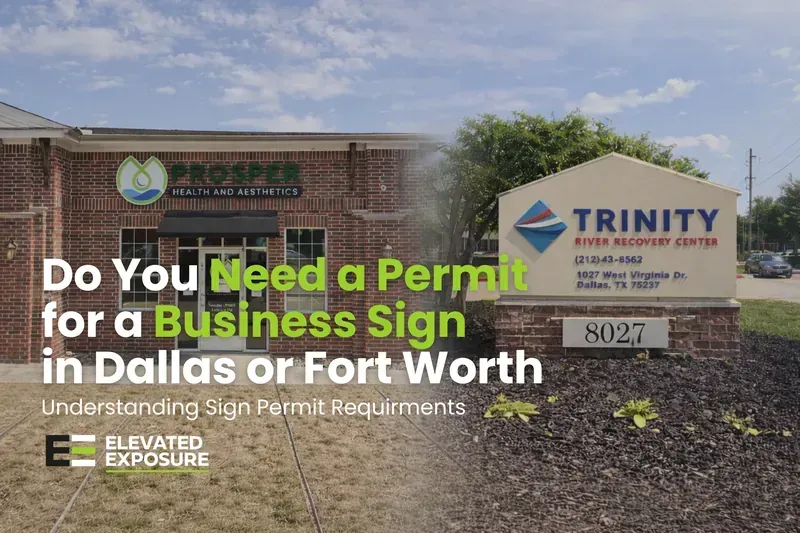
Do You Need a Permit for a Business Sign in Dallas or Fort Worth
Why Sign Permits Matter for Commercial Signage
When a business installs exterior signage, the process often involves more than design and fabrication. In most cities, including Dallas and Fort Worth, commercial signage is regulated through municipal zoning codes that control sign size, placement and illumination.
These regulations exist to maintain safety, preserve visual consistency in commercial districts and ensure signs do not interfere with roadways, buildings or pedestrian areas. Businesses planning signage should understand these rules before installation begins.
Many business owners begin thinking about signage during a renovation, new construction project or storefront upgrade. At that stage it becomes important to determine whether a permit is required before installing the sign.
When a Business Sign Requires a Permit
In many cases, exterior signage requires municipal approval before installation. This is especially common when the sign includes structural components, lighting or large display surfaces.
Cities establish sign regulations to control how businesses present signage in public environments. These rules typically apply to several types of commercial signs.
Monument Signs
Monument signage often requires permitting because it involves structural installation. These freestanding signs are typically placed near property entrances and may include foundations or underground supports.
Because monument signs are visible from roadways and affect the visual landscape of the area, city planning departments usually review them carefully before installation.
Channel Letter Signs
Channel letters are dimensional letters mounted to the exterior of a building and frequently illuminated with LED lighting. Because these signs involve electrical components and mounting hardware, permits may be required before installation.
Channel letter signage is commonly used by retail storefronts, restaurants and corporate offices, making it one of the most frequently permitted signage types.
Large Building Mounted Signs
Building mounted signage that exceeds certain size thresholds may also require approval. Cities often regulate the total square footage of signage allowed on a building façade to maintain visual balance along commercial corridors.
Sign Permit Requirements in Dallas
In Dallas, commercial sign regulations fall under the city development code. These regulations outline how signage may be installed within different zoning districts throughout the city.
Businesses planning signage usually must submit documentation that includes sign dimensions, placement details and design specifications. City reviewers evaluate these submissions to ensure the sign complies with zoning regulations and does not create safety concerns for nearby traffic or infrastructure.
Sign Permit Requirements in Fort Worth
Fort Worth follows a similar regulatory structure for commercial signage. Businesses installing exterior signs may need to submit plans that illustrate the size of the sign, its height and its relationship to the building or property.
These guidelines help ensure signage fits within the broader visual environment of the surrounding commercial district while maintaining safety standards.
Temporary Signs and Permit Exceptions
While many permanent signs require permits, some temporary signage may fall under different regulations depending on local rules.
Temporary banners, promotional signage or event displays may sometimes be exempt from permitting requirements if they are displayed for a limited period. However, businesses should still review local regulations before installing temporary signage to ensure compliance.
What the Sign Permit Process Usually Involves
The permitting process typically requires businesses to submit drawings or renderings that illustrate how the sign will appear on the building or property.
These documents often include measurements, materials, illumination details and placement information. City reviewers use this information to determine whether the proposed sign meets zoning requirements.
Planning Signage Early to Avoid Delays
Businesses preparing to install signage often find that early planning helps simplify the permitting process. When signage is considered during the design phase of a project, architects and business owners can incorporate signage into the building plans rather than trying to retrofit signage later.
Another important factor is property ownership and landlord approval. Businesses leasing space within shopping centers or office buildings may need authorization from the property owner before installing signage.
Many commercial developments maintain signage standards that ensure all tenants follow consistent design guidelines.
Why Signage Compliance Matters for Businesses
Retail storefronts rely heavily on signage to attract customers and establish brand recognition along busy streets. Restaurants depend on visible signage to help diners identify their location quickly when traveling through commercial corridors.
Corporate offices and medical facilities often use exterior signage to guide visitors toward entrances and parking areas.
Because signage regulations vary by city and zoning district, businesses benefit from working with professionals who understand local permitting requirements. You can find our Dallas sign permit guide here. Proper planning ensures the signage design meets municipal regulations while still achieving strong visibility and branding.
In large metropolitan regions like Dallas Fort Worth, commercial signage plays a major role in helping businesses communicate with customers. Signs function as both identification and marketing tools, helping customers locate the business and recognize the brand before entering the building.
Elevated Exposure Signs and Graphics works with businesses across Dallas Fort Worth to plan signage systems that align with local regulations while supporting strong brand visibility.
From monument signs and building signage to event displays and interior branding, signage solutions can be designed to meet both functional and regulatory requirements.
If your business is planning to install signage with an experienced sign company in Dallas, Fort Worth or surrounding communities, understanding the local permit process can help ensure the project moves forward efficiently.
Visit
https://elevatedexposuredfw.com
to explore commercial signage solutions or request a project estimate.
Frequently Asked Questions About Sign Permits
Do businesses need a permit to install a sign in Dallas
Many exterior business signs in Dallas require permits, particularly illuminated signs, monument signs or large building signage.
Do businesses need a permit for signage in Fort Worth
Fort Worth regulates commercial signage through zoning codes that often require permits for permanent exterior signage installations.
What types of business signs usually require permits
Monument signs, illuminated channel letter signs and large building mounted signage commonly require permits because they involve structural installation or electrical components.
How long does it take to get a sign permit in Dallas or Fort Worth
Permit timelines vary depending on the complexity of the project and the documentation submitted with the application.
Can a business install a sign without a permit
Installing signage that requires permits without approval may result in violations or removal requirements depending on local regulations.