



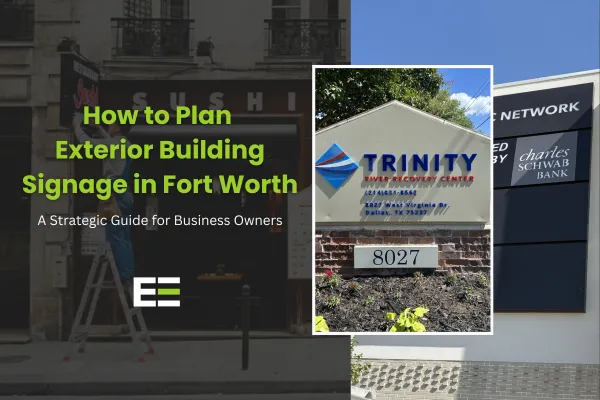
How to Plan Exterior Building Signage in Fort Worth: A Strategic Guide for Business Owners
Exterior building signage is one of the most important investments a business makes when establishing or upgrading a physical presence in Fort Worth. It is often the first branded element a customer encounters, and it plays a direct role in visibility, credibility and long term recognition. In competitive commercial corridors throughout Fort Worth, strong signage can influence whether a business is noticed or overlooked.
Planning exterior signage requires more than selecting a logo and mounting it to a façade. It involves understanding the environment, evaluating regulatory requirements, aligning with property standards and making strategic design decisions that support business goals.
Understanding the Role of Exterior Building Signage
Exterior building signage serves several essential purposes. It identifies your location, communicates your brand and signals permanence to customers. In Fort Worth, where new developments and commercial growth continue to expand, signage must compete visually with surrounding businesses, traffic patterns and architectural features.
Effective exterior signage should accomplish three core objectives. It should be visible from appropriate distances, legible at typical traffic speeds and aligned with your brand identity. When these elements work together, signage becomes an extension of your marketing strategy rather than a simple requirement.
Businesses that approach signage with this level of planning tend to see stronger brand recall and improved customer navigation.
Evaluating Your Specific Location in Fort Worth
Every property presents unique challenges and opportunities. Before committing to a design, it is essential to evaluate the physical environment.
Consider the following factors:
Traffic speed and direction. A location along a higher speed roadway may require larger lettering and stronger illumination.
Setback distance from the street. The farther the building sits from the road, the more scale and contrast matter.
Visual competition. Nearby businesses, billboards and architectural elements can either enhance or dilute visibility.
Lighting conditions. Daytime glare and nighttime visibility both affect readability.
This evaluation stage determines how your signage must perform. A storefront in a pedestrian friendly district in Fort Worth may benefit from refined dimensional lettering, while a property along a major commercial corridor may require illuminated channel letters for optimal impact.
Signage design should respond to context, not ignore it.
Navigating Fort Worth Sign Regulations
Municipal sign codes directly influence exterior signage planning. In Fort Worth, regulations may address maximum square footage, mounting height, illumination type and zoning district restrictions.
Understanding these requirements early prevents costly redesigns or delays. Exterior building signage in commercial districts may require documentation and review depending on size and placement. Property owners and developers may also impose additional criteria beyond city regulations.
When signage planning begins with awareness of municipal standards, the project moves more efficiently and reduces uncertainty.
Businesses that treat compliance as part of the strategy rather than a final step often experience smoother project timelines.
Selecting the Appropriate Exterior Sign Type
Different building types and commercial goals call for different signage solutions. In Fort Worth, the most common exterior building signage types include:
Channel Letter Signs
Channel letters are individually fabricated letters mounted directly to a building façade or to a raceway. They are often illuminated and widely used for retail, restaurants and professional offices.
These signs provide strong visibility during both daytime and nighttime hours. They allow flexibility in font, color and scale, making them one of the most versatile exterior signage options.
Dimensional Letter Signs
Dimensional letters are non illuminated raised letters mounted directly to the façade. They create depth and sophistication, particularly in professional office settings or environments with lighting restrictions.
Raceway Mounted Signs
In some cases, channel letters are mounted to a raceway that houses electrical components. This can simplify installation and maintenance while preserving façade integrity.
Architectural Signage
Architectural signage integrates branding into the building materials themselves. This may include metal panels, custom framing or integrated design elements that enhance the overall façade.
Selecting the right type of signage depends on visibility goals, brand positioning and regulatory considerations.
Planning Illumination for Visibility
Illumination plays a critical role in exterior building signage. In Fort Worth, many businesses operate during evening hours, making nighttime visibility essential.
Common illumination options include front lit channel letters, reverse lit halo letters and internally illuminated panels. Each option produces a different visual effect and level of brightness.
When planning illumination, consider electrical access, energy efficiency and long term maintenance. Modern LED systems offer consistent brightness and durability while minimizing energy consumption.
Illumination should enhance clarity, not overwhelm it. Overly bright signage can create glare, while insufficient lighting may reduce legibility.
Balanced lighting contributes to professionalism and compliance.
Aligning Signage with Brand Identity
Exterior building signage must reflect brand standards. Color accuracy, font consistency and proportion all contribute to brand recognition.
Before fabrication begins, confirm that logo files are high resolution and properly formatted. Ensure that brand guidelines address color contrast and readability when applied to illuminated materials.
A well designed sign strengthens brand identity. A poorly executed one can weaken it, even if technically compliant.
Exterior signage should feel like a natural extension of your brand system.

Coordinating with Property Management and Developers
Many commercial properties in Fort Worth operate within shopping centers, office parks or multi tenant developments. These environments often have signage criteria established by landlords or property management teams.
Criteria may include:
Maximum sign dimensions
Approved color palettes
Illumination restrictions
Mounting location guidelines
Early coordination with property management prevents delays and ensures alignment with overall site design.
Exterior signage should complement the architectural environment while maintaining brand clarity.
Considering Long Term Durability
Exterior building signage is exposed to weather conditions, temperature changes and environmental wear. Material selection influences longevity.
Common materials include aluminum, acrylic and composite panels. Quality fabrication ensures that signage resists fading, warping and structural degradation.
Durability should be evaluated alongside aesthetics. A sign that looks impressive at installation but deteriorates quickly undermines brand perception.
Investing in high quality materials often reduces long term maintenance costs.
Budgeting for Exterior Signage
One of the most common questions business owners ask is how much exterior building signage costs in Fort Worth. Pricing varies widely based on size, materials, illumination type and installation complexity.
Factors influencing cost include:
Overall square footage
Fabrication materials
Electrical integration
Permit coordination
Installation requirements
Exterior signage is a customized solution, not a standard product. Planning should include a realistic budget aligned with visibility goals and property requirements.
A structured estimate process helps clarify scope and expectations.
Planning the Installation Process
Installation is more than mounting a sign to a wall. It involves proper alignment, secure fastening and coordination with electrical systems when illumination is involved.
Professional installation ensures safety and compliance. It also protects the integrity of the building façade.
Timing is another critical consideration. Installation schedules should align with business opening timelines, particularly for new developments or relocations.
Clear communication between business owners, property managers and installation teams supports a smooth process.
Exterior Signage as Infrastructure
Businesses often treat signage as the final step in a project. In reality, exterior building signage should be planned alongside architectural and branding decisions.
Signage affects how customers perceive your location, how easily they find you and how your business integrates into the surrounding commercial environment.
In Fort Worth, where development continues to expand, exterior signage plays a direct role in competitive positioning.
Approaching signage as infrastructure encourages better decision making. It shifts focus from short term cost to long term visibility and brand strength.
Common Mistakes to Avoid
Several common mistakes can undermine exterior signage effectiveness.
Underestimating visibility distance
Ignoring municipal requirements until late in the process
Selecting materials based solely on price
Failing to align with brand guidelines
Overlooking lighting conditions
Avoiding these pitfalls requires planning and consultation early in the project lifecycle.
Thoughtful evaluation at the beginning reduces complications later.
Integrating Exterior Signage into a Broader Signage System
Exterior building signage is often one component of a larger signage system. Interior lobby signs, wayfinding signage and ADA compliant elements should complement exterior branding.
Consistency across exterior and interior signage strengthens brand cohesion. It also creates a seamless customer experience from entry to navigation within the space.
Planning signage holistically ensures that each element supports the others.
Final Thoughts
Exterior building signage in Fort Worth is both a branding decision and a strategic investment. It influences visibility, credibility and compliance.
When approached thoughtfully, exterior signage enhances a business’s presence and integrates effectively within the local commercial landscape.
If you are planning exterior building signage in Fort Worth or the surrounding DFW area, visit https://elevatedexposuredfw.com to learn more about professional, compliant and strategically planned signage solutions.