




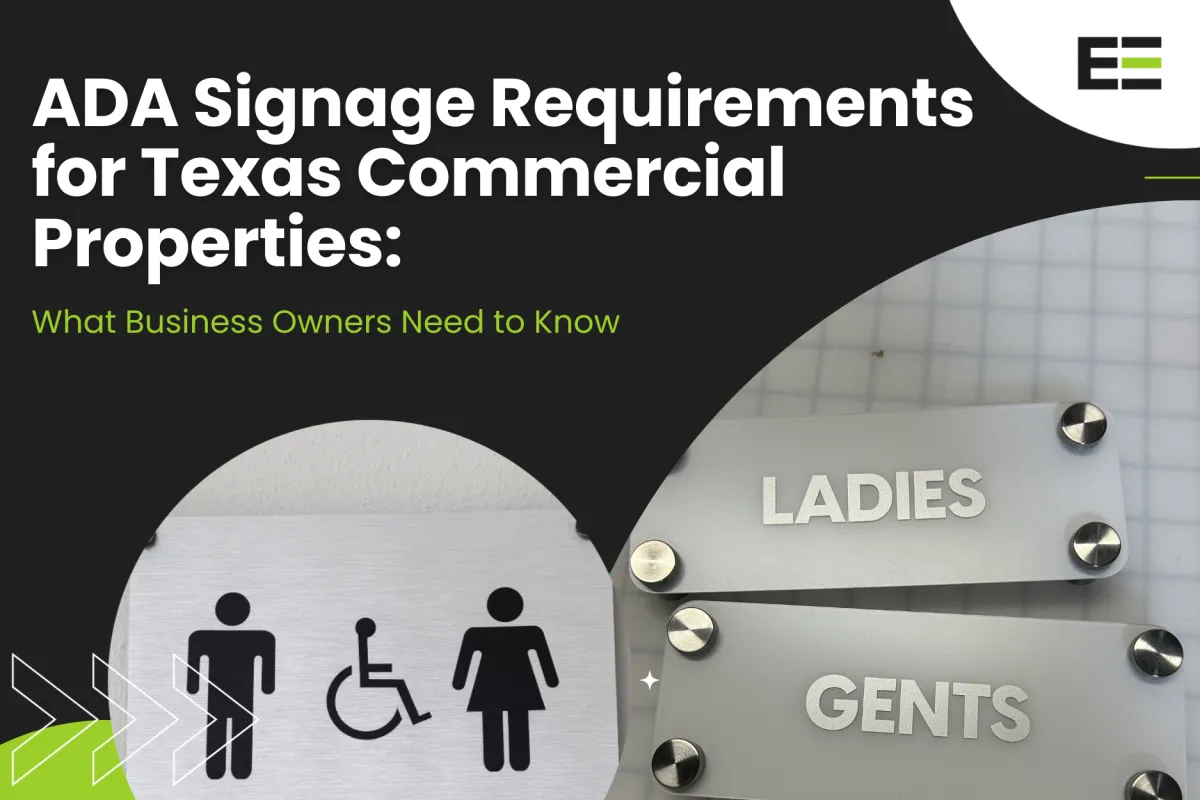
ADA Signage Requirements for Texas Commercial Properties: What Business Owners Need to Know
Accessibility is a legal requirement for commercial properties in Texas, but it is also a matter of professionalism and inclusion. Interior signage plays a central role in ensuring that spaces are navigable and understandable for all individuals.
Business owners across Fort Worth and Dallas frequently ask what ADA signage requirements apply to their properties. Understanding these standards helps prevent compliance issues and supports a positive visitor experience.
Accessibility signage should not be an afterthought. It should be integrated into overall interior planning from the beginning.
What Is ADA Compliant Signage
ADA compliant signage refers to signs that meet standards established under accessibility guidelines. These standards address tactile lettering, braille, color contrast and mounting height.
Common applications include:
Restroom identification
Room number signs
Directional signage
Exit signs
Permanent room labels
Interior commercial spaces are typically required to include tactile and braille elements where applicable.
Tactile Lettering Requirements
ADA signage standards require raised characters on certain interior signs. These characters must meet specific size and spacing guidelines to ensure readability by touch.
Letters must be uppercase and raised from the background surface. The thickness and height of characters must fall within regulated parameters.
Improper tactile execution can result in non compliance, even if braille is included.
Braille Requirements
Braille is required on permanent room identification signs in most commercial settings. The braille must be positioned directly below the corresponding tactile text.
Spacing, placement and format must meet standards to ensure accuracy and usability.
Using incorrect braille translation or improper placement can undermine compliance.
Contrast and Color Considerations
Signage must provide sufficient contrast between text and background. Contrast ensures legibility for individuals with visual impairments.
While brand colors are important, accessibility standards may require adjustments to maintain compliance.
Businesses should evaluate color combinations carefully to ensure readability without sacrificing brand integrity.
Mounting Height and Location
ADA signage must be mounted within specific height ranges and positioned consistently relative to doors and entry points.
Placement standards help ensure that signs are predictable and accessible.
Incorrect mounting height is a common compliance issue in commercial build outs.
Planning signage placement early in construction prevents costly adjustments later.
Which Businesses Must Comply
Most commercial properties open to the public must meet accessibility requirements. This includes:
Retail stores
Medical offices
Corporate offices
Restaurants
Hospitality venues
New construction and significant renovations are particularly subject to review.
Businesses unsure of their obligations should consult relevant accessibility guidelines during planning stages.
Integrating ADA Signage with Interior Design
Accessibility compliance does not require sacrificing aesthetics. Modern fabrication techniques allow tactile and braille elements to integrate cleanly into professional environments.
Materials such as acrylic, metal and composite panels can be fabricated to meet accessibility standards while aligning with brand identity.
Consistency across lobby signage, directional systems and room identification supports both compliance and visual cohesion.
Common ADA Signage Mistakes
Frequent compliance issues include:
Incorrect braille translation
Improper mounting height
Insufficient contrast
Missing tactile characters
Inconsistent placement
These mistakes often arise when accessibility is addressed late in the project.
Integrating ADA considerations during initial design reduces risk.

ADA Signage and Legal Risk
Non compliant signage can expose businesses to complaints or corrective action. Beyond legal implications, non compliant environments can negatively impact brand perception.
Accessibility should be viewed as a commitment to inclusivity and professionalism, not merely a regulatory hurdle.
Clear and compliant signage enhances the experience of all visitors.
Planning ADA Signage in Texas Commercial Projects
For businesses in Fort Worth and Dallas, ADA compliant signage should be planned alongside other interior signage components.
Coordinating tactile elements, wayfinding systems and lobby branding ensures that compliance integrates seamlessly with the overall environment.
When treated as a foundational element rather than an afterthought, accessibility signage becomes part of a cohesive interior strategy.
If you are planning interior signage for a commercial property in Fort Worth, Dallas or surrounding DFW communities, visit https://elevatedexposuredfw.com to learn more about compliant and professionally executed signage solutions.