



Channel Letter Signs vs. Monument Signs: Which Is Right for Your DFW Storefront?
If you own a storefront in the Metroplex, you have probably compared channel letter signs Dallas Fort Worth retailers use to grab attention after dark against the ground-mounted monument signs you see at office parks and shopping centers. Both tell customers a business is established and easy to find, but they solve different problems depending on where your building sits. This guide breaks down what each sign type does well, where DFW cities tend to require one over the other, and how to figure out which fits your property.
What Are Channel Letter Signs?
Channel letter signs are individually fabricated, three-dimensional letters mounted directly to your building's exterior, most often on the fascia above the entrance. Each letter is built from aluminum returns with either an acrylic face or an open back, then wired for illumination so your name reads clearly day and night. Illuminated channel letter signs are the standard choice for retail centers, restaurants, and any storefront that depends on evening or after-hours traffic to notice the business.
Reverse channel letter signs flip the construction: the face stays solid while light escapes from behind the letter, washing the wall around it in a soft glow. That backlit effect is what people mean by a halo lit sign, and it has become popular with law firms, medical offices, and upscale retail brands that want signage that reads as refined rather than loud.

What Are Monument Signs?
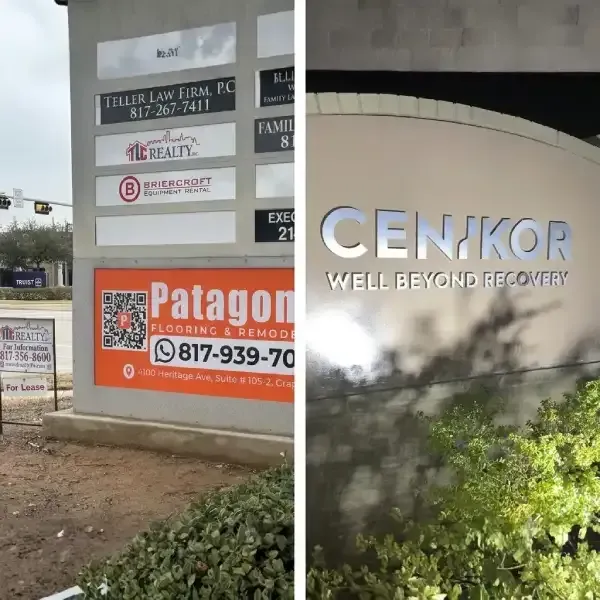
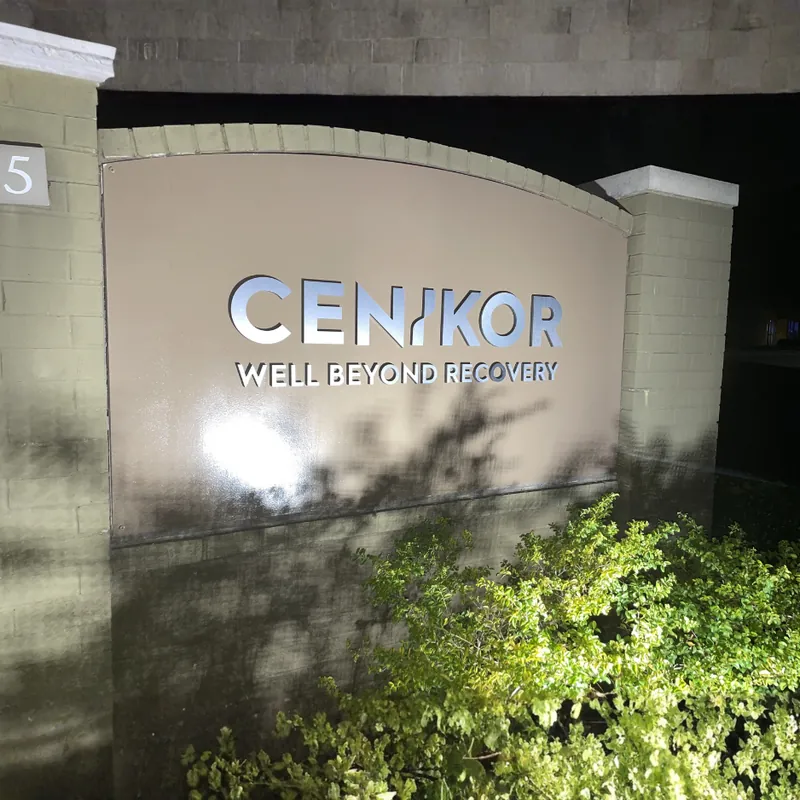
A monument sign is a ground-level structure, usually built on a brick, stone, or metal base, that sits at a driveway entrance or property line instead of mounting to the building itself. Monument signs DFW cities frequently require them for office parks, medical campuses, and multi-tenant retail centers where the building sits back from the road and a wall sign alone would not be visible from the street.
Because a monument sign has a lower profile, cities such as Southlake, Colleyville, and Highland Park often prefer it over a tall pole sign in districts with strict aesthetic codes. It also allows multiple tenants to share one structure, with individual panels for each business, which channel letters cannot do on their own.
Channel Letter Signs vs. Monument Signs: Key Differences That Matter in DFW
The clearest difference comes down to where each sign lives. Channel letters attach to the building and work best when your storefront faces the street directly, with little or no setback. Monument signs sit at ground level near the property line, which makes them the stronger option when a parking lot, landscaping, or distance separates your building from traffic.
Permitting also diverges. Channel letters need an electrical permit and a sign code review tied to the building's zoning, while a monument sign typically needs a site plan review and, in some cases, a foundation inspection since it is a standalone structure. Neither process is difficult, but the timeline and paperwork differ enough that it is worth confirming with your sign provider before committing to a design.
Along larger commercial corridors such as I-35, US-75, or SH-121, some businesses add a pylon sign into the mix. Pylon signs stand taller than a monument sign and are built for visibility at highway speed, which makes them a common third option where monument height limits fall short of what a busy frontage road demands.
Which Storefront Type Needs Which Sign?
A single-tenant retail unit with a short, direct sightline to the road is usually best served by channel letters on the fascia. A medical office or corporate campus set back from the street, with a shared parking lot and several suites, almost always gets more value from a monument sign at the entrance drive.
Many DFW properties need more than one sign working together. Our exterior commercial signs team maps out full packages, so a monument sign at the drive, channel letters on the building, and directional signage through the parking lot all share the same colors, fonts, and materials instead of reading like three separate decisions.
Illumination Options: Halo Lit vs. Standard Illuminated Channel Letters
Standard illuminated channel letter signs push light forward through an acrylic face, producing a bright, high-contrast look that reads well from a distance and holds up against direct sunlight glare. That makes them a strong fit for retail chains and restaurants on busy roads where visibility matters more than subtlety.
Halo lit signs, built with reverse channel letter construction, send light backward against the wall instead of through the letter face. The result is a soft outline around each letter rather than a bright fill, which tends to read as more upscale. Interior designers and brand teams often choose halo lit signs for boutique retail, spas, and professional offices where the goal is a refined first impression rather than maximum brightness.
What Drives the Investment in Either Sign Type
Cost for both sign types depends on more than square footage. Letter height, illumination method, wiring runs, and whether a monument sign needs a new foundation or can use an existing base all shift the final number. Rather than guessing at a budget from a general price range, the more useful step is a site visit where measurements, power access, and your city's sign code get confirmed together before any design work begins.
Maintenance differs too. Channel letters are largely maintenance-free once installed, aside from occasional LED module replacement years down the line. Monument signs, especially internally lit cabinets, may need panel replacement if a tenant changes, plus routine landscaping upkeep around the base.
Common DFW Sign Code Patterns to Know Before You Design
Sign code in the Metroplex is not one set of rules. Each city sets its own limits on height, square footage, illumination, and setback, and those limits often shift again inside historic or planned-development overlays. Old Town McKinney and downtown Grapevine, for example, restrict internally lit cabinet signs in favor of more traditional storefront treatments, which pushes many businesses there toward channel letters or non-illuminated dimensional letters rather than a lit monument cabinet.
Properties along a state highway frontage road add another layer, since TxDOT right-of-way rules can affect where a monument sign's foundation is allowed to sit relative to the road easement. HOA-governed retail centers, common throughout Frisco, Prosper, and Little Elm, frequently add their own design review on top of the city's code, covering everything from cabinet color to letter font. None of this makes either sign type off-limits, but it does mean a design that works two miles away might need adjustment for your specific address.
A Real-World Way to Think About the Decision
In our experience working across DFW retail corridors and office parks, the businesses that end up happiest with their signage are the ones that treat the sign type as a site-planning question first and a branding question second. A restaurant tucked into a strip center with forty feet of street frontage gets far more value from bold, illuminated channel letters than from a monument sign it would have to share with four other tenants. A dental practice set two hundred feet back from the road, behind a shared parking lot, gets the opposite result: a monument sign at the entrance does the work that channel letters on a barely visible building never could.
The pattern holds across almost every property we have evaluated: sightline and setback decide the sign type, and brand style decides the details, illumination method, and finish, layered on top of that base decision.
How to Decide: Questions to Ask Before You Choose
Before committing to either sign type, walk through a short list of questions with your sign provider. How far back does your building sit from the road? Does your city's sign code cap pole or monument height in your zoning district? Does your property fall inside a historic overlay or an HOA-governed retail center with its own design review? Will more than one tenant need representation on the same structure? Does your brand benefit more from bright, direct illumination or the softer look of a halo lit sign? The answers usually point clearly toward one option, or confirm that your property is a strong candidate for both.
STOREFRONT SIGNAGE QUESTIONS DFW OWNERS ASK US MOST
What is the main difference between channel letter signs and monument signs?
Channel letter signs mount directly to a building and use individually illuminated letters, while monument signs are ground-level structures built near the street or driveway entrance. The right choice depends mostly on how far your building sits from the road and whether one or multiple tenants need signage.
Are illuminated channel letter signs allowed in every DFW city?
Most DFW cities allow illuminated channel letter signs, but height, brightness, and placement rules vary by municipality and zoning district. Checking your specific city's sign code before finalizing a design avoids permit delays.
What is a halo lit sign?
A halo lit sign is a channel letter sign built with reverse channel construction, so light shines backward against the wall and creates a soft glow around each letter instead of a bright, front-facing fill. Businesses that want a premium, understated look often choose this style over standard illuminated letters.
Do monument signs need electricity?
Not always. Some monument signs use external spotlights or ground-level uplighting instead of internal illumination, while others have lit cabinets that require an electrical connection similar to a channel letter installation. The choice usually comes down to the look you want and your property's existing power access.
Can a property use both channel letters and a monument sign?
Yes, and many DFW properties do exactly that. A monument sign at the driveway entrance identifies the property from the road, while channel letters on the building identify the specific business once a customer has pulled into the lot.
How long do channel letter signs typically last outdoors?
Well-built channel letter signs typically last 10 to 15 years before major components need attention, with LED modules being the part most likely to need replacement first. Regular exposure to Texas heat and storms makes routine inspection worth scheduling every couple of years.