




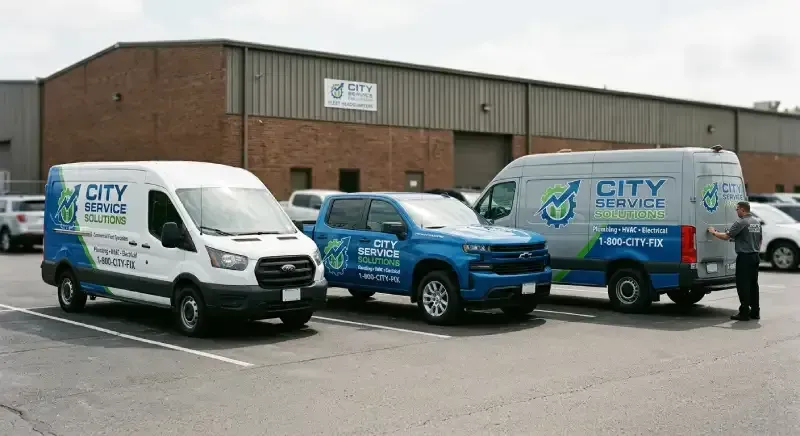
Fleet Wraps 101: Branding Your Company Vehicles Across DFW
Every truck, van, or trailer a business owns already drives past thousands of potential customers a week, whether it's advertising anything or not. A fleet wrap is what turns that unavoidable driving into a brand asset instead of a blank panel of paint. Put simply, a fleet wrap is a matching set of vinyl graphics applied across every vehicle a company operates, so a customer recognizes the business the same way whether they see the van on I-35W or the service truck parked outside a neighbor's house.
For a Fort Worth or Dallas business running more than one vehicle, fleet wrap services in Fort Worth and Dallas cost a fraction of what the same reach would cost in billboards or digital ads over the same stretch of years, and they keep working long after a single ad campaign would have ended This guide covers what a fleet wrap program actually costs, how to plan the rollout without pulling every truck off the road at once, and what to check before signing with an installer.
What Is a Fleet Wrap?
A fleet wrap is a set of vinyl graphics applied across every vehicle a company operates, built from one master design so a customer recognizes the brand whether they see the service van downtown or the box truck out in Arlington. That consistency is the whole point. A single wrapped truck is a nice-looking vehicle. A fleet wrapped to the same standard is a moving brand system, and it tells a prospective customer something about the business before a sales rep ever knocks on the door.
The design itself usually scales a core template (logo placement, color block, contact information, and any required DOT markings) across different vehicle bodies, from a compact cargo van to a flatbed. Some companies wrap every vehicle identically; others reserve the full treatment for customer-facing trucks and use a lighter design on support vehicles. Either approach works as long as the brand elements, the logo, the phone number, the website, stay in the same place and the same colors on every vehicle, so the fleet reads as one company no matter which truck someone happens to see first.
Why DFW Businesses Are Wrapping Their Fleets
Fleet wraps work because they turn a cost a business already carries, the vehicles it drives every day for work, into advertising that keeps running without a recurring media bill. Fleet graphics average about $0.48 per thousand impressions, compared to $3.56 for billboards, according to a three-month study on fleet graphics conducted by 3M. A single wrapped vehicle can also generate 30,000 to 70,000 impressions a day, per 3M's fleet graphics research, depending on how much it's driven and where.
For a Fort Worth or Dallas business whose trucks already log hundreds of miles a week across I-30, I-35W, and Loop 820, or a service fleet cutting across Tarrant and Dallas counties on daily calls, that reach compounds fast. A billboard sits in one spot. A wrapped fleet moves through job sites, drive-throughs, parking lots, and highway traffic all day, in front of a different set of eyes every time a truck turns a corner. Local businesses that depend on being recognized in their own service area, HVAC contractors, electricians, landscapers, delivery services, tend to see the fastest return, because the same trucks are already covering the exact neighborhoods their next customers live in.
Think of a five-truck plumbing company running service calls across Fort Worth. Each truck sits outside a different customer's home for an hour or two at a time, parked on a residential street where neighbors, mail carriers, and passing traffic all get a clear look at the logo and phone number. Over a month, that's dozens of driveways and hundreds of passing cars per truck, all without buying a single ad slot. A wrapped fleet effectively rents out that visibility for free, since the truck was already going to be there for the job.
What Determines Fleet Wrap Pricing
Four variables move the price of a fleet wrap project more than anything else: vehicle size, how much of each vehicle is covered, design complexity, and how many vehicles go into the same project. A small sedan or cargo van sits at the lower end of any wrap shop's pricing, while a box truck or semi-trailer sits at the higher end, simply because they use more material and more install time. A full wrap always costs more than a partial wrap or a decal package on the same vehicle for the same reason.
Design complexity affects price as much as vehicle size does. A custom illustrated wrap with detailed artwork takes longer to produce and install than a template built around an existing logo and a color block, so it costs more. Material grade is another factor: cast vinyl holds up longer under the Texas sun than calendered vinyl and costs more upfront, though it typically pays for itself over the life of the wrap in fewer repairs and a longer stretch before a refresh is needed. Prep work is the variable owners most often forget to budget for. A vehicle with old graphics to strip off, or paint that needs minor repair before a wrap goes on, adds time that a brand-new vehicle wouldn't need.
Most wrap shops offer volume pricing once a business commits to five or more vehicles in one project, since the design work is shared across the fleet and installers can schedule the work in batches instead of as separate one-off jobs. That's the biggest lever a fleet owner actually controls: how many vehicles go into the same project, and how much coverage each one gets, rather than defaulting to a full wrap on every single vehicle out of habit. Mixing full wraps on customer-facing trucks with partial wraps or decals on support vehicles is a common way to control the total without cutting the brand impact where it matters most. The only way to get an accurate number for a specific fleet is a quote against the actual vehicles involved, since published price lists rarely account for the mix of makes, models, and condition a real fleet has.
Full Wrap, Partial Wrap, or Fleet Decals: Choosing the Right Coverage

A full wrap covers the entire vehicle in vinyl, panel to panel, and delivers the strongest brand impression. It's the right call for the trucks and vans that show up at customer sites or sit in visible lots, since they're doing the most brand work for the business.
A partial wrap covers a defined portion, the hood, the sides, the tailgate, or a wrap-around stripe, and costs less while still carrying the logo and brand colors. It fits larger fleets on a tighter budget, or vehicles the company leases and wants to keep easier to de-wrap at turn-in.
Decals and lettering cover just the essentials: logo, phone number, website, and any required USDOT markings, applied directly to the factory paint. This is the lowest-cost option and makes sense for support vehicles, trailers that rarely face the public, or a first phase before a company commits to full wraps.
In practice, most fleets end up mixing these. Customer-facing service trucks get the full wrap treatment, while backup vehicles or equipment trailers carry decals. That split keeps the brand consistent where it matters most without wrapping every vehicle at full-wrap prices on day one, which is often the more realistic way to phase a fleet branding budget over a year or two rather than all at once.
If you're starting with a single vehicle instead of the whole fleet, our vehicle graphics and wraps page covers single-vehicle options in more depth
Planning a Fleet Wrap Program Step by Step

A fleet rollout has more moving parts than a single vehicle wrap, mainly because the business still has to run while vehicles come off the road for install. Trying to handle it the same way as a single wrap, one vehicle, one appointment, one design decision, is usually where fleet projects run into scheduling problems. A workable plan usually follows this order.
Inventory the fleet. List every vehicle by make, model, and body style, and flag which are leased. Leased vehicles may need a design your installer can remove cleanly at turn-in without damaging factory paint.
Build one master design, then scale it. Design the wrap once against your brand guide, then adapt it to each body style so a cargo van and a box truck still read as the same brand parked side by side.
Stagger the installs. Group vehicles into waves by route or shift so the whole fleet isn't off the road at the same time. A common approach is to wrap two or three vehicles a week rather than pulling every truck in one weekend.
Protect required markings. USDOT numbers, GVWR plates, and any other legally required markings need to stay visible and unobstructed in the final design, not buried under a graphic element.
Remove old branding first. Any prior lettering, decals, or wrap material comes off before the new wrap goes on, and that prep step is worth building into the install timeline.
Set a refresh date. Wraps have a working lifespan (see the next section), so a fleet program should include a rough year for the next design refresh, not just the initial install.
How to Track Whether Your Fleet Wraps Are Working
Fleet wraps don't come with the built-in analytics of a digital ad, but a business can still measure the impact with a few simple habits. The most reliable signal is the oldest one in local marketing: ask every new customer how they found you, and log it. Once the wraps are on, a noticeable uptick in "saw your truck" answers is a direct read on the wrap's performance.
A few other low-effort tracking methods work well alongside that: put a short vanity URL or QR code on the wrap that isn't used anywhere else, so traffic to that link can only have come from the vehicle. Assign a dedicated phone extension or call-tracking number to the wrap design and compare call volume before and after the install. For fleets with several vehicles, note which trucks run which routes and compare lead volume by service area over the following few months. None of this requires special software, just consistent logging, and it gives an honest before-and-after picture instead of a guess.
Keeping Your Fleet Wraps Looking Sharp
A wrap that looks worn undercuts the brand it's supposed to build, so upkeep matters as much as the initial install. Hand washing, or a touchless automatic wash, keeps the vinyl intact far longer than a brush-style car wash, which can lift edges and scratch the laminate over time. Parking in shade when it's practical cuts down on UV fade, especially through a Texas summer, and a quick look-over every few weeks catches small tears or lifting corners before they spread into a bigger repair.
With reasonable care, a quality wrap typically holds up for four to seven years, which is why the refresh timeline from the planning step matters: a fleet wrapped on a schedule looks intentional, while one left to fade past its working life starts to work against the brand instead of for it.
Permits, Compliance, and DOT Considerations in Texas
Vehicle wraps and static signs fall under different rules, and that distinction trips up a lot of business owners planning their first fleet project. Fort Worth and Dallas sign ordinances are generally written around signs attached to buildings, monuments, and other fixed structures, not graphics on a vehicle that's actively used for business. That means a wrapped service truck usually doesn't need the same sign permit a new monument sign at your office would.
That said, most Texas municipalities do restrict using a vehicle as a stationary sign, parking it in one visible spot for extended periods mainly to advertise rather than to do actual work. If a wrapped vehicle sits in the same lot every day and never drives a route, some cities can treat it as an off-premise sign rather than a vehicle graphic. The safest approach is to keep wrapped vehicles in active daily use and check your specific city's code, or ask your installer, if you plan to park one in a fixed, highly visible location.
One more compliance point that's easy to overlook in the design phase: USDOT numbers and other federally required markings on commercial vehicles have to stay legible under whatever wrap design goes on top. A good installer will flag this during design review, not after the vehicle is already wrapped.
Choosing a Fleet Wrap Partner in DFW
A single vehicle wrap and a fleet program call for different things from an installer. For a fleet, look for a shop that can manage multi-vehicle scheduling from one point of contact, ideally with the option to install on-site at your yard rather than sending every truck across town one at a time. Ask to see fleet work specifically, not just single-car wraps, since designing a system that scales across different body styles is a different skill than wrapping one sedan.
In our experience working with Fort Worth and Dallas businesses on multi-vehicle projects, the rollouts that go smoothest are the ones planned around the client's actual operating schedule from the start, not squeezed in after the fact. Elevated Exposure Signs and Graphics is led by Keith Mensah, who holds a master's degree in City and Regional Planning and has built the company as a Texas HUB-certified minority-owned business, and that planning background shows up directly in how fleet rollouts get sequenced across a client's routes and shifts. A material warranty and a clear timeline for the next design refresh are worth confirming up front as well, so there are no surprises three years into the wrap's working life.
It's also worth asking a prospective installer how they handle a fleet that mixes vehicle ages and conditions, since most real fleets aren't ten identical trucks bought the same year. A shop that's only wrapped individual customer cars may not have a good answer for how to sequence installs around an older box truck that needs paint repair first, or a leased van that needs a fully reversible design. A shop that regularly handles fleet work will usually walk through that kind of detail unprompted, before a design is even finalized.
Frequently Asked Questions
How much does it cost to wrap a fleet of 10 vehicles?
It depends heavily on vehicle mix and coverage choice. Ten sedans or cargo vans wrapped in full cost meaningfully less than ten box trucks, and a fleet that mixes full wraps on customer-facing vehicles with partial wraps or decals on support vehicles brings the total down further. Most shops apply volume pricing once a project hits five or more vehicles, so a per-vehicle rate on a 10-vehicle job typically comes in lower than wrapping the same vehicles one at a time. The only way to get an accurate number is a fleet quote against your specific vehicles.
Do all my fleet vehicles need the same wrap design?
They need the same brand elements (logo, colors, contact information) in the same places, but the coverage can vary. Many fleets put a full wrap on customer-facing trucks and a partial wrap or decal package on support vehicles, which still keeps the brand consistent while managing cost.
Is wrapping better than painting a fleet?
For branding purposes, yes, in most cases. A wrap installs faster than a paint job, costs less for the same visual result, and protects the factory paint underneath, which helps resale value when the vehicle eventually leaves the fleet. Paint still has a place for a permanent color change with no plan to rebrand, but for a business logo and contact information, a wrap is the more practical and reversible option.
Do I need a permit to wrap my company vehicles in Fort Worth or Dallas?
Generally no, since vehicle wraps aren't treated the same as a fixed sign under most local sign ordinances, as long as the vehicle stays in active daily use. The exception is parking a wrapped vehicle in one visible spot purely to advertise, which some cities can classify as an off-premise sign. Check your city's ordinance if you plan to station a vehicle somewhere long-term rather than drive it on a route.
How long do fleet wraps last?
A quality wrap typically holds up for four to seven years with regular care, hand washing or touchless automatic washes, shade parking when possible, and prompt repair of small tears. Heavy sun exposure and rough automatic car washes can shorten that lifespan.
Can I wrap leased vehicles?
Yes, and it's common practice, but plan the design with removal in mind. A professional installer can apply and later remove a wrap without damaging factory paint, which matters at lease turn-in. Confirm with your leasing company whether they require the vehicle returned wrap-free, and build that removal cost into your budget from the start.