



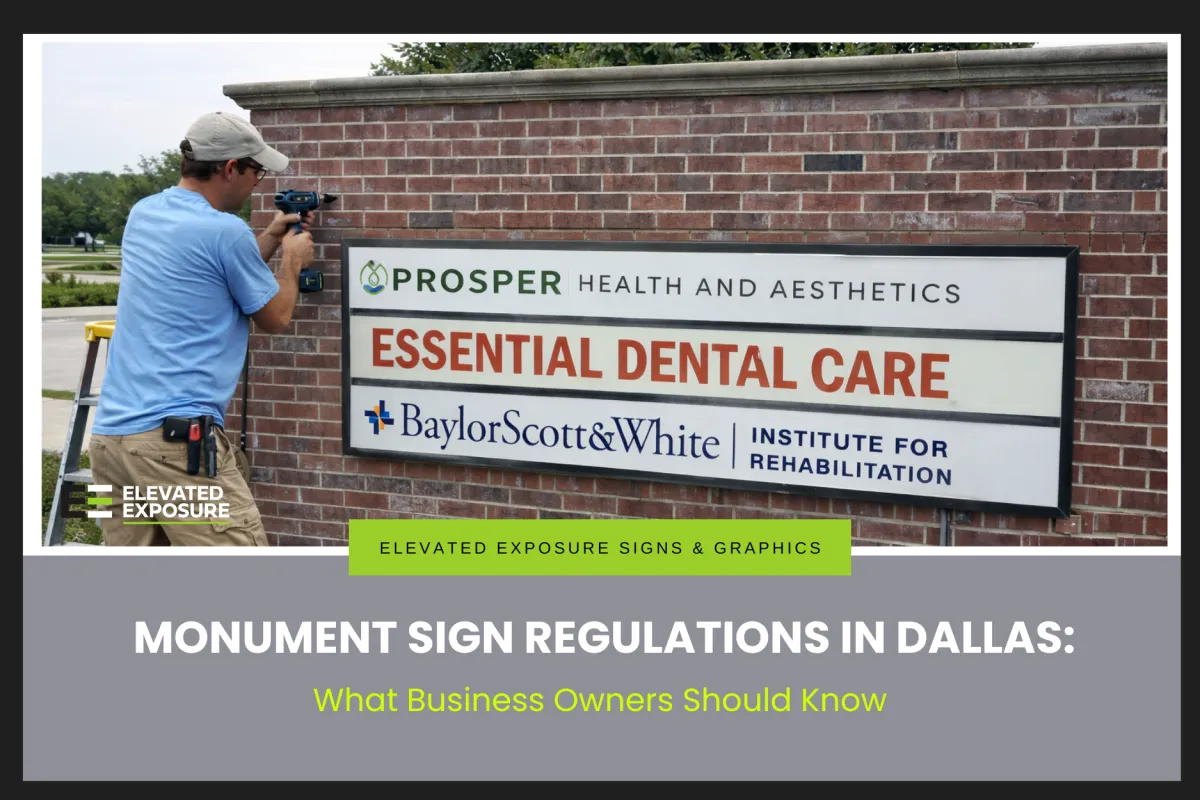
Monument Sign Regulations in Dallas: What Business Owners Should Know
Monument signs are one of the most recognizable forms of exterior signage in Dallas. Positioned at property entrances, they establish identity, support wayfinding and reinforce permanence. For office parks, retail centers, medical campuses and multi tenant developments, monument signage often serves as the primary visual anchor for a property.
However, monument signage in Dallas is not simply a design decision. It is a regulatory matter governed by zoning classifications, size limitations and placement requirements. Business owners who approach monument signage without understanding these rules often encounter delays or redesigns.
Understanding how monument sign regulations function in Dallas allows businesses to plan more efficiently and avoid unnecessary complications.
What Is Considered a Monument Sign in Dallas
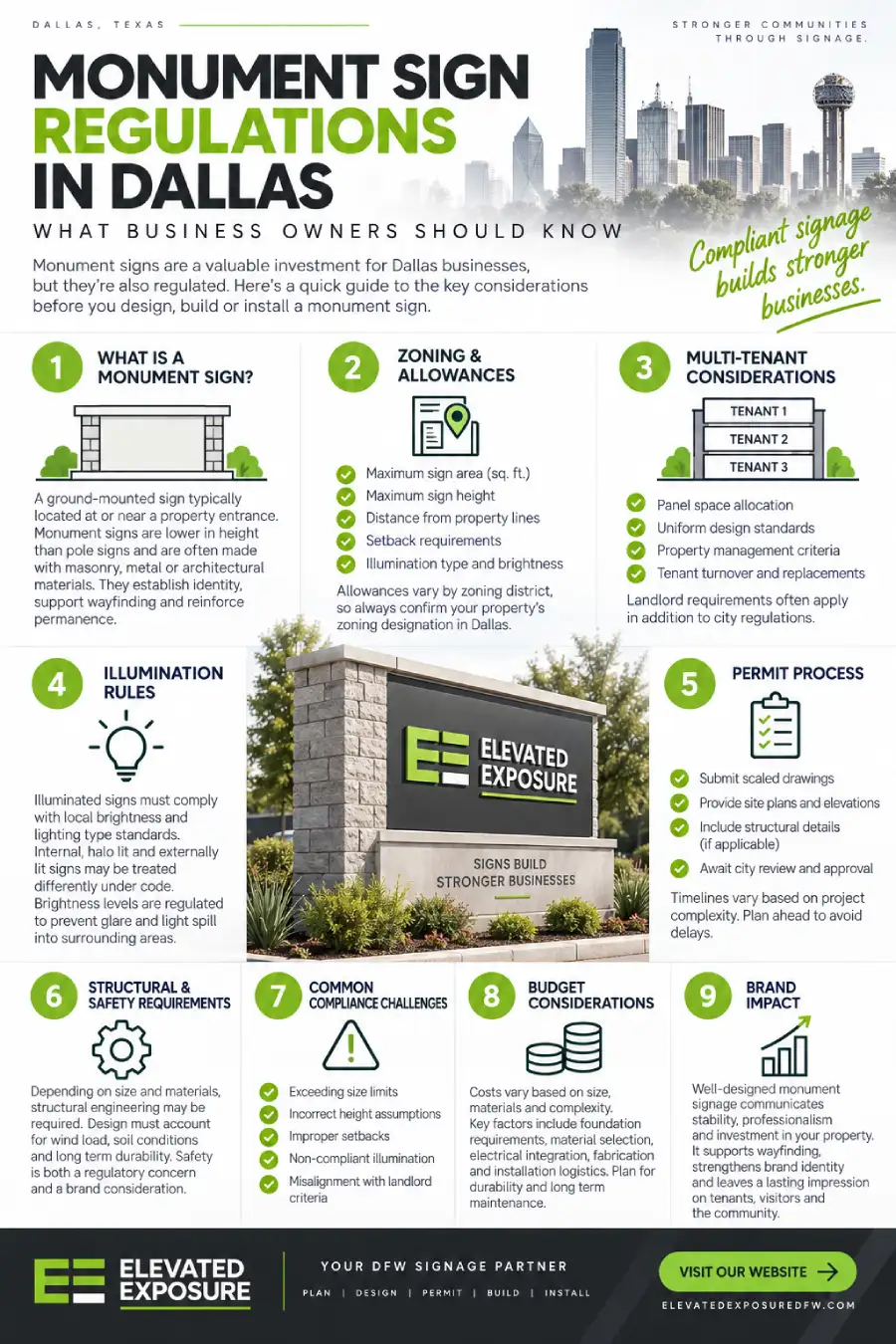
A monument sign is typically a ground mounted structure that sits at or near a property entrance. Unlike pole signs, monument signs are lower in height and are often constructed with masonry, metal or architectural materials designed to complement the building.
Monument signs may serve single tenant properties or multi tenant developments. In either case, the sign’s size, illumination and placement are subject to local review.
The purpose of these regulations is to maintain visual consistency and safety along commercial corridors.
Zoning and Monument Sign Allowances
In Dallas, sign allowances are generally tied to zoning classifications. Commercial districts may permit monument signage with specific dimensional limits, while other districts impose stricter controls.
Key factors typically evaluated include:
Maximum sign area measured in square feet
Maximum sign height
Distance from property lines
Setback requirements from streets
Illumination type and brightness
Because zoning classifications vary across Dallas neighborhoods, monument sign allowances are not uniform citywide. Businesses must confirm the zoning designation of their property before finalizing design dimensions.
Planning signage without this verification can lead to costly revisions.
Multi Tenant Monument Sign Considerations
Retail centers and office parks frequently utilize multi tenant monument signs. These signs list multiple businesses within a shared structure.
Multi tenant signage introduces additional considerations:
Allocation of panel space per tenant
Uniform design standards
Property management criteria
Tenant turnover and panel replacement
In many developments, landlords establish signage criteria that govern font style, color limitations and panel dimensions. These private standards operate alongside municipal regulations.
Successful monument signage planning requires coordination between tenant, landlord and municipal guidelines.
Illumination Regulations in Dallas
Illuminated monument signs must comply with local standards governing brightness and lighting type. Internally illuminated cabinets, halo lit lettering and externally lit signage may be treated differently under code.
Brightness levels are often regulated to prevent glare and light spill into surrounding areas. Placement and orientation also influence compliance.
Businesses planning illuminated monument signage should account for electrical access and potential review requirements.
Energy efficient LED systems are commonly used, but compliance extends beyond energy usage to overall impact on surrounding properties.
The Dallas Permit Process for Monument Signs
In most cases, monument signage in Dallas requires review and documentation prior to installation. While requirements vary based on project scope, the process generally includes submission of:
Scaled drawings
Site plans
Sign elevations
Structural details if applicable
Review timelines depend on workload and complexity. Projects that align closely with established regulations typically move more smoothly than those requiring variances or exceptions.
Planning ahead is essential. Monument signage should not be treated as a last minute addition to a development timeline.
Structural and Safety Considerations
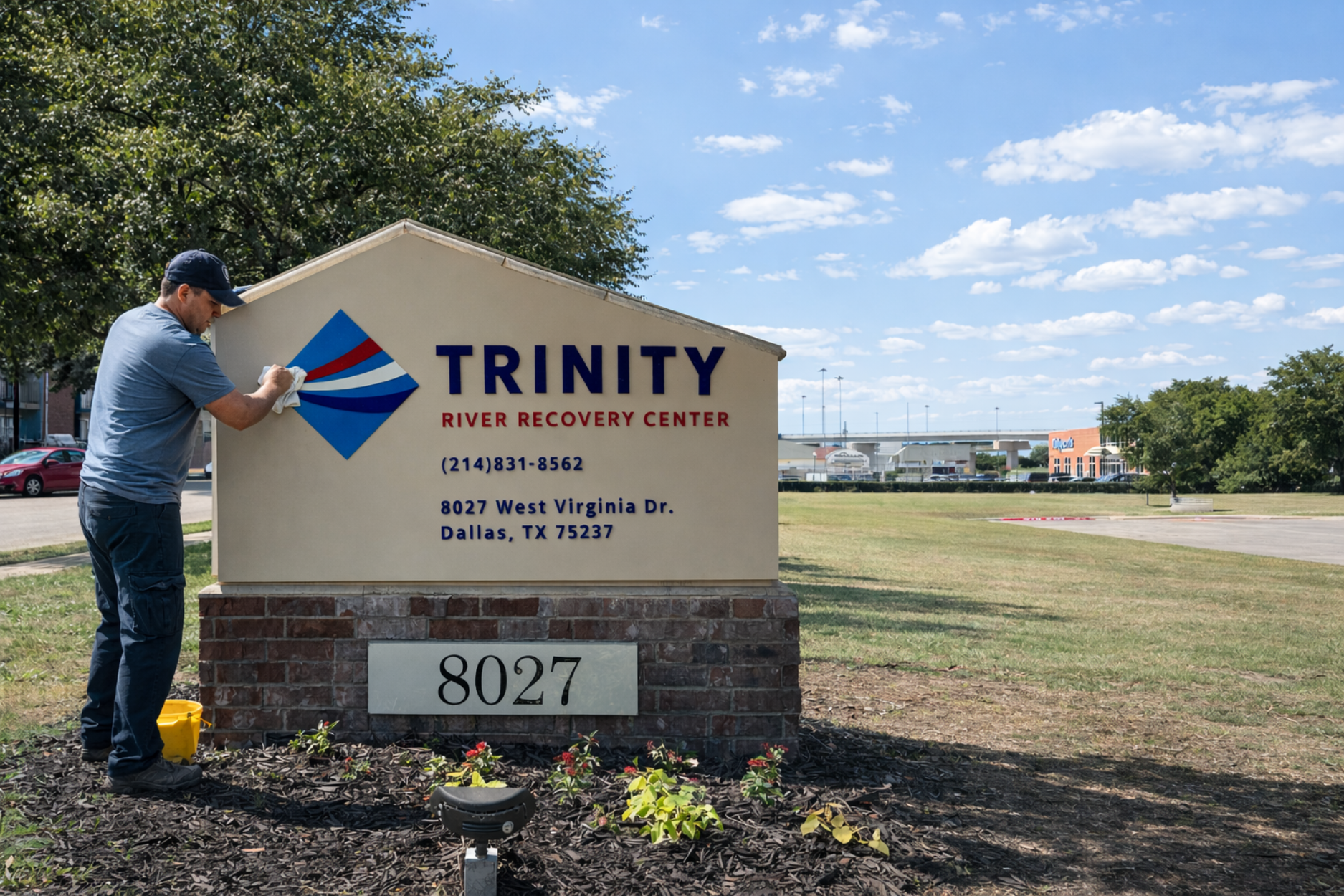
Monument signs are structural elements anchored to the ground. Depending on size and materials, structural engineering may be required to ensure stability.
Weather conditions, wind load and soil conditions can influence design requirements. Durable materials such as masonry and metal are often used to ensure longevity.
Safety is not only a regulatory concern but also a brand consideration. A poorly constructed monument sign can undermine credibility.
Professional planning reduces risk and supports long term performance.
Common Compliance Challenges
Several issues commonly arise during monument sign planning:
Exceeding allowable square footage
Incorrect height assumptions
Improper setback from property lines
Non compliant illumination levels
Failure to align with landlord criteria
These issues can delay installation and increase costs.
Businesses that begin the design process with awareness of these constraints are better positioned to move forward efficiently.
Budgeting for Monument Sign Projects
Monument sign cost in Dallas varies widely depending on size, materials and complexity. A simple cabinet style monument sign will differ significantly in cost from a masonry structure with integrated lighting.
Cost factors typically include:
Foundation requirements
Material selection
Electrical integration
Fabrication complexity
Installation logistics
Because monument signs are often long term fixtures, budgeting should account for durability and maintenance rather than focusing solely on initial expense.
Strategic planning helps balance visibility goals with realistic financial expectations.
Monument Signs and Brand Positioning
Monument signage communicates more than location. It communicates stability, professionalism and investment in the property.
For multi tenant developments, monument signage also reflects the overall identity of the property. Clean, cohesive design supports tenant perception and visitor confidence.
Businesses should evaluate how monument signage integrates with building architecture and surrounding landscaping.
Well designed monument signs contribute to long term brand equity.
Coordinating Monument Signs with Other Signage Elements
Monument signage often works alongside channel letters, building mounted signage and directional systems. Consistency across these elements strengthens brand presence.
Color schemes, typography and lighting style should align across all exterior signage components.
Viewing monument signage as part of a broader system enhances overall impact.
Planning Monument Signage as Infrastructure
Monument signs are permanent features that shape how a property is perceived. They influence navigation, branding and community presence.
In Dallas, where commercial growth continues to expand, monument signage must be planned with regulatory awareness and strategic intent.
Businesses that treat monument signage as infrastructure rather than decoration tend to experience smoother project execution and stronger long term visibility.
If you are planning commercial signage in Dallas or the surrounding DFW area, visit https://elevatedexposuredfw.com to learn more about structured, compliant and professionally executed signage solutions.