




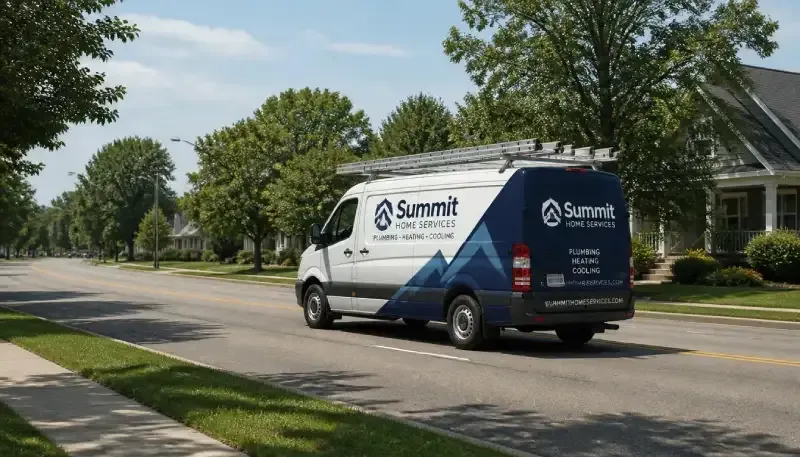
Vehicle Wraps Cost and ROI: What Fort Worth Businesses Should Budget For
Most business owners asking what a vehicle wrap costs get the same answer from every shop they call: it depends. That is true, and it is useless. So here is the number first. A full vehicle wrap in the Dallas Fort Worth market runs roughly $2,500 for a compact car to $8,000 for a box truck, with most work vehicles landing between $2,500 and $5,000. Lettering and decal packages often start under $500.
What that number does not tell you is whether it is worth spending. This guide covers both halves: what to budget, including the two line items almost nobody quotes up front, and how to figure out whether the wrap pays for itself. We build vehicle graphics for Fort Worth and Dallas businesses every week, and the owners who are happiest a year later are the ones who did this math before they signed, not after.
Key Takeaways
Full vehicle wraps run about $2,500 to $8,000 depending on vehicle size. Most vans and pickups land between $2,500 and $5,000.
Design and removal are the two costs that rarely appear in the first quote. Budget $300 to $1,000 for design and $500 to $1,500 to take the wrap off at the end of its life.
A wrapped vehicle costs nothing per month after installation, which is the entire ROI argument against billboards, radio, and paid search.
At a $500 average job and a 40 percent gross margin, a $4,000 wrap pays for itself with about 20 jobs spread over five years. That is four jobs a year.
Vehicle wraps used to advertise a business are generally deductible as an advertising expense under IRS rules. Confirm the treatment with your CPA.
Wraps last four to seven years in North Texas. Sun exposure is the biggest variable, and it
What This Guide Covers
What a vehicle wrap costs in 2026
What is actually inside that number
The budget tier below a wrap: decals, lettering, and magnets
The five-year cost nobody budgets for
How to calculate vehicle wrap ROI without fooling yourself
Break-even by average job value
Is a vehicle wrap tax deductible?
What makes a wrap underperform
What to ask before you sign
Frequently asked questions
What a Vehicle Wrap Costs in 2026
A full vehicle wrap costs between $2,500 and $8,000 in 2026, depending almost entirely on vehicle size and how much of the body gets covered. The national guides quote wider bands than that. J.D. Power puts truck wraps at $1,500 to $6,000 and Kelley Blue Book gives roughly $2,000 to more than $10,000 for a full wrap, but those ranges fold in owner-installed work at the bottom and color-change and specialty finishes at the top. For a professionally installed commercial wrap in cast vinyl, which is what a business vehicle actually needs in this climate, the practical floor in the DFW market is closer to $2,500.
Here is the picture broken out the way a business actually shops for it, scaled by vehicle from the ranges we publish on our own fleet wraps page and cross-checked against published 2025 and 2026 industry pricing guides.

Treat these as planning ranges rather than quotes. They assume cast vinyl, professional installation, and a vehicle in reasonable paint condition. Box trucks and trailers sit above the typical bands because of sheer surface area. Two things push any project toward the top of its range or past it: old graphics that have to be stripped off first, and custom illustration work instead of a design built around an existing logo. The only number that means anything for a specific vehicle is a quote against that vehicle.
What Is Actually Inside That Number

A wrap quote bundles four separate costs, and knowing the split makes it much easier to see where a cheap quote got cheap.
Design. Usually $300 to $1,000. A shop quoting design at zero is either templating your logo onto a stock layout or burying the cost elsewhere. Ask whether you own the finished files.
Material. Cast vinyl with a manufacturer warranty costs more than calendered film and behaves completely differently in Texas heat. This is the line item where saving money costs money.
Printing and lamination. Laminate is what protects the print from UV and abrasion. On a vehicle that lives outdoors in North Texas, skipping it is not an option worth considering.
Installation labor. The largest share on most vehicles, and the one that varies most by body style. Flat panels install fast. Bumpers, mirrors, wheel arches, and door handles do not.
When two quotes on the same van are $1,800 apart, the difference is almost always material grade or install time, not profit margin. Asking a shop to break the quote into those four lines is the fastest way to find out which.
The Budget Tier Below a Wrap: Decals, Lettering, and Magnets

Not every vehicle needs a wrap, and pretending otherwise is how businesses overspend on their first branding project. There are three tiers below a full wrap, each with a real use case.
Cut vinyl lettering and logo decals put your name, phone number, website, and any required USDOT markings directly on the factory paint. At $300 to $800 installed, often under $500 on a car or small van, this is the highest return per dollar in the entire category, because the information a customer actually needs is the same whether it sits on a $450 decal package or a $4,000 wrap. For a plain white van, lettering alone often looks intentional rather than cheap.
Spot graphics and partial wraps sit in the middle, covering defined areas like doors, the hood, the tailgate, or a wrap-around stripe. They carry brand colors and a real design while leaving most of the paint exposed, and they are the sensible default for vehicles the company leases.
Magnetic signs are the temporary option, usually well under $200 a pair. They are worth naming because a lot of small businesses start here, and they have a real failure mode: magnets trap moisture and grit against the paint, and left on for months they mark the panel underneath. If a vehicle is permanently in service for the business, a decal package is cheaper over three years and does not damage anything.
In our experience the most common regret is not going too cheap. It is buying a full wrap for a vehicle that rarely leaves a yard, while the truck that sits in front of customers every day still has a magnet on the door.
The Five-Year Cost Nobody Budgets For
Almost every published wrap cost guide stops at installation. Real ownership does not. A wrap has a service life, and at the end of it somebody has to take it off before the next one goes on. Here is a full five-year picture for one cargo van with a full wrap.

Removal is the one to watch. A wrap taken off inside its service life comes away cleanly and the labor is modest. A wrap left on for nine years in Texas sun does not, and scraping cured adhesive off a full van can approach what a fresh partial wrap would have cost. If a shop will not quote removal at the start, that tells you something about how long they expect the vinyl to last.
The number worth carrying into a budget conversation is the bottom row. A wrap is not a $4,000 expense. It is roughly $70 to $100 a month for five years, with no recurring media bill attached to it. That framing is also what makes the ROI question answerable.
How to Calculate Vehicle Wrap ROI Without Fooling Yourself
Every article on this topic quotes the same impression statistic: a wrapped vehicle generates 30,000 to 70,000 views a day, at a cost per thousand impressions far below billboards. We are going to be straight about that number. It circulates everywhere in the wrap industry and is usually credited to an outdoor advertising association, but we have not been able to trace it to a published, methodology-documented study. It may well be directionally right. It is not something to build a purchase decision on.
What you can build a decision on is arithmetic you can check yourself. There are two honest ways to do it.
Method one: cost per month against your other advertising
Take the five-year total from the table above and divide by 60. A $4,500 all-in wrap is $75 a month. Then put that next to what you already spend: a single month of paid search for a home services company in DFW routinely runs more than the entire wrap. The wrap keeps working in year four with no additional spend, which no monthly channel does. This comparison does not require any impression data at all, which is exactly why it holds up.
The honest caveat: a wrap is not a substitute for a channel that generates measurable demand. It is a compounding recognition asset. Treat it as the thing that makes your other marketing work better, not as a lead source you can turn up when the schedule gets thin.
Method two: break-even by average job value
This is the calculation we actually walk clients through, because it converts an abstract expense into a number an owner can feel. Take your five-year wrap cost, then ask how many jobs it has to produce to cover itself. Below, a $4,000 all-in wrap, shown both against revenue and against gross profit at a 40 percent margin, which is the more honest test.

Read the $500 row. A wrap on a service van has to generate four jobs a year, for five years, to pay for itself out of gross profit. For an HVAC company, a landscaper, or a mobile mechanic working Tarrant and Dallas counties, that is a low bar. For a business with a $250 ticket, it is eight jobs a year, still achievable but worth thinking about before wrapping the whole fleet at once.
To know whether you are hitting it, you have to track. Ask every new customer how they found you and log the answer. Put a phone extension or a call tracking number on the wrap that appears nowhere else. Use a short vanity URL that only lives on the vehicle. None of that requires software, and it turns a guess into a number by month three.
Is a Vehicle Wrap Tax Deductible?
Generally yes. Advertising and promotion costs are treated as ordinary and necessary business expenses under IRS regulations (Reg. 1.162-1(a)), and a wrap whose purpose is to advertise the business falls in that category. That materially changes the real cost of the project, and it is the reason a wrap and a repaint are not financially equivalent even when the sticker prices are close.
Two caveats worth stating plainly. First, we build signs, not tax returns: confirm the treatment and the timing with your CPA before you count on it, because how a cost gets deducted can depend on the amount and on how your business is structured. Second, a color change with no branding on it is not advertising, and nobody should pretend otherwise on a tax form. Wrap the vehicle for the business and the paperwork is straightforward.
What Makes a Wrap Underperform
A wrap that does not pay for itself usually failed at the design stage, not the install. Four patterns account for most of it.
Too much information. A vehicle is read in about three seconds from a moving car. A wrap carrying a service list, three social icons, a QR code, and a slogan communicates none of it. Name, one service line, and one way to contact you is the whole brief.
Contrast that fails at distance. A design that looks sharp on a monitor at arm's length can disappear at forty feet. Dark text on a dark panel and thin script fonts are the usual culprits.
No call to action. Plenty of wraps show a logo and a website and nothing that tells someone what to do. A phone number in large, high-contrast type outperforms almost everything else on a work vehicle.
Wrapping the wrong vehicle. The full treatment belongs on whatever sits in front of customers and runs the busiest routes. A support vehicle that lives at the yard should get lettering.
The fix for all four is cheap if it happens before printing and expensive afterward. Ask to see a proof mocked up on the actual vehicle, then look at it from thirty feet away on a phone screen. If you cannot read the phone number, neither can a customer at a stoplight.
What to Ask Before You Sign
Searching car wraps near me returns a map of shops sorted by proximity and review count, which tells you nothing about whether a shop can do commercial work well. Six questions separate them quickly.
What material grade and what warranty? Cast vinyl with a manufacturer warranty, in writing.
Is the quote broken into design, material, print, and install? A shop that will not itemize is a shop you cannot compare.
Do I own the design files? If you cannot take the artwork elsewhere in five years, you are locked in.
What does removal cost, and when should I plan for it? A real answer here signals a shop that expects the wrap to last.
Can I see commercial work, not just color changes? Wrapping a show car and branding a service fleet are different disciplines.
Where does the install happen, and can you come to us? For more than a couple of vehicles, on-site installation changes the whole schedule.
Proximity still matters, just not the way the map suggests. What matters is whether the shop can reliably reach you across the Metroplex, from Fort Worth and Dallas out to Arlington, Grand Prairie, North Richland Hills, Saginaw, Plano, Irving, Grapevine, Hurst, and Bedford.
Frequently Asked Questions
How much does a full car wrap typically cost?
A full car wrap typically costs $2,500 to $3,500 for a compact car or sedan and $2,500 to $4,000 for an SUV or crossover. Larger vehicles cost more: pickups run $2,800 to $4,500 and cargo vans $3,000 to $5,000. Design work, material grade, and any old graphics that need removing first all move the final number.
Is car wrapping better than paint?
For a business vehicle, yes, in almost every practical respect. A wrap installs in one to three days instead of one to two weeks, costs less for the same visual result, prints full-color artwork that paint cannot reproduce affordably, and comes off later without damaging the factory paint underneath. Paint still wins on service life, at ten years or more against four to seven for vinyl.
How long do car wraps actually last?
Four to seven years with reasonable care, and the North Texas sun is the biggest variable in that range. Vehicles that park in shade and get hand washed sit at the top of it. Vehicles that live outdoors in full sun and go through brush car washes sit at the bottom. Horizontal surfaces like the hood and roof always fade before the sides do.
Can a wrapped car go through a car wash?
A touchless automatic wash is fine. A brush-style wash is not, because the brushes catch and lift the edges of the vinyl over time. Hand washing with mild soap is best, and a pressure washer should be kept off the seams and edges. Bird droppings, tree sap, and fuel spills need to come off quickly, since they etch vinyl faster than they etch paint.
Does wrapping a car depreciate the value?
No, and it usually does the opposite. Vinyl shields the factory paint from UV, light abrasion, and road grime, so a panel under a wrap often comes out in better condition than one that spent five years exposed. The caveat is removal: a wrap left far past its service life can leave adhesive behind and take real labor to clean up, and a poorly executed removal is what damages paint, not the wrap itself.
Where is the best place to get my car wrapped in Fort Worth?
Look for a commercial graphics company rather than a general tint or detail shop, and ask to see business vehicle work in their portfolio. The things that matter are itemized quotes, cast vinyl with a written warranty, ownership of your design files, and a shop that can install on site if you have more than a vehicle or two. Our vehicle graphics and wraps team works with businesses across Fort Worth and Dallas and will quote all four cost lines separately.
The Short Version
Budget $2,500 to $5,000 for a full wrap on most work vehicles, add design at the front and removal at the back, and think about the total as roughly $70 to $100 a month over five years rather than a lump sum. Then run the break-even against your own average job value. If the answer is a handful of jobs a year, the decision is not close.
If you are weighing a wrap for one vehicle, the useful next step is a proof mocked up on your actual make and model so you can judge readability before anything gets printed. If you are looking at several vehicles, start with an inventory: body style, leased or owned, and which ones sit in front of customers. That one list turns a vague budget question into a phased plan.
Related reading: our fleet wraps page covers multi-vehicle programs and volume pricing, Fleet Wraps 101 walks through phasing a rollout across DFW, and best car wraps and vehicle graphics ideas is the place to start on design.