



Window and Wall Graphics: Vinyl Branding Options for DFW Storefronts and Offices
Key Takeaways
Window graphics use one-way vision perforated vinyl, frosted film, or full-color prints; wall graphics use dimensional lettering, textured wraps, or wall murals.
Cast vinyl outlasts calendered vinyl on curved surfaces and under direct Texas sun, especially with a UV laminate.
Pricing depends on square footage, vinyl grade, and whether the surface needs prep or removal of old material first.
Professional installation prevents the bubbling, peeling, and misaligned seams that make DIY vinyl look worse than no branding at all.
One local vendor can usually handle both a small custom sticker order and a full storefront or office graphics package.
Window and wall graphics are printed or cut vinyl films applied to glass and interior surfaces to advertise a business, brand an office, or add privacy and wayfinding cues. For DFW storefronts and offices, they solve a specific problem: turning blank glass and empty walls into branded space without construction, permits, or downtime. If you've searched for a “sticker shop near me” because you need something bigger than a single decal, window and wall graphics are the commercial-grade version of the same vinyl process, sized and engineered for storefronts,lobbies, and office interiors.
What Are Window and Wall Graphics?
Window and wall graphics are vinyl films, cut or printed, that adhere to glass or interior wall surfaces to communicate a brand message, block or filter visibility, or guide people through a space. Unlike paint or wallpaper, vinyl graphics install in hours, remove cleanly when done right, and can be swapped out for a seasonal promotion or a full rebrand without touching the underlying surface.
Window graphics typically fall into a few categories: perforated vinyl that lets people see out while blocking (or partially blocking) the view in from outside, frosted or etched-glass-look film for private offices and conference rooms, and full-color printed graphics for storefront advertising. Wall graphics cover interior branding: a lobby logo, dimensional cut-vinyl lettering, a mural-scale wrap, or wayfinding signage that directs visitors through a building.
The two categories overlap in practice. A retail storefront in Fort Worth or a Dallas medical office might order window graphics for the entrance and matching wall graphics for the reception area in the same project, using the same vinyl family for consistency.
Finding the Right “Sticker Shop Near Me” for Commercial-Grade Vinyl
A lot of business owners start this search the same way: they type “sticker shop near me” expecting a quick custom decal or a batch of stickers for a product line, and end up realizing they actually need something larger: a storefront window package, an office wall logo, or a full interior branding rollout.
That's a useful instinct, because the underlying process is the same. Wall and window graphics come from the same wide-format printers, the same vinyl rolls, and often the same install crews as a small sticker order. The difference is scale, material grade, and how the install is handled: a sticker goes on with hand pressure and a squeegee; a twelve-foot storefront window or a textured office wall needs surface prep, panel matching, and a crew that can hang a straight line across multiple seams.
What this means practically: if a “sticker shop near me” search keeps turning up print-only shops that don't install, or install crews that don't handle small custom runs, you're likely one call away from a shop that does both. A DFW sign and graphics company that handles channel letters and monument signs almost always has the printers, laminators, and install trucks to do a storefront window package on Monday and a run of custom stickers for a trade show giveaway on Tuesday.
Window Graphics: Turning Storefront Glass Into Advertising Space
Storefront glass is some of the most valuable, and most wasted, real estate a DFW business owns. Foot traffic and drive-by visibility pass it every day, and a bare window says nothing about what's inside.
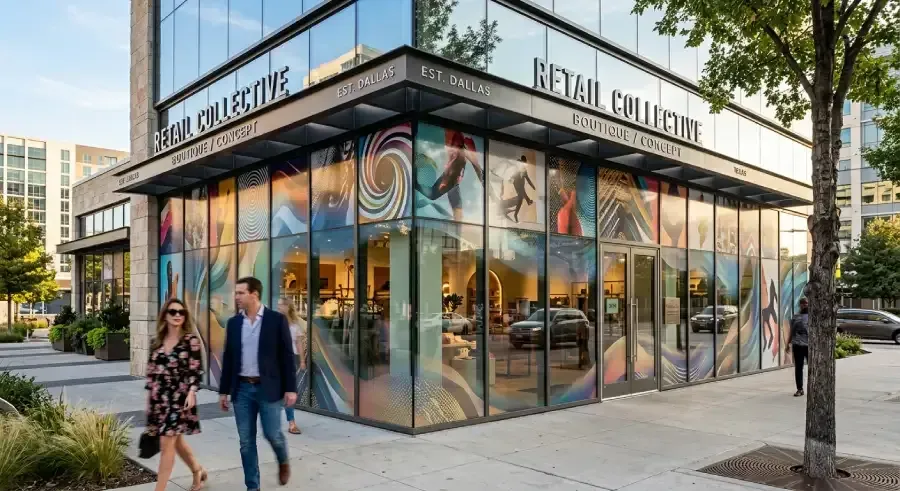
Perforated window vinyl, a printed film with thousands of tiny holes, covers the outside of the glass with a full-color graphic while people inside can still see out. It's the standard choice for large storefront windows where a business wants maximum visual impact from the street without blacking out natural light for staff or customers.
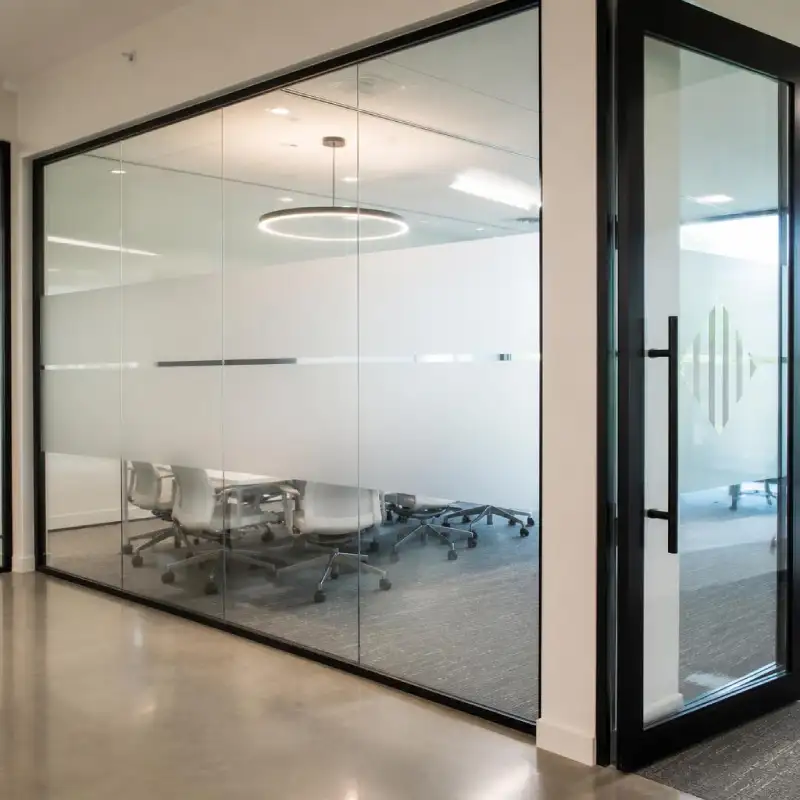
Frosted and etched-glass-look film does the opposite job: it obscures visibility rather than adding a graphic. Conference rooms, private offices, and glass-walled break rooms use frosted film for privacy, often combined with a clear vision strip or a cut-vinyl logo so the glass doesn't read as fully opaque.
Static cling and removable decals cover shorter-term needs: seasonal promotions, temporary hours-of-operation notices, or a “Now Open” announcement while permanent signage is in production. These come off without adhesive residue, which matters for leased storefronts where the landlord expects the glass back in its original condition.
Full-color printed window graphics work for storefronts that want a specific image, not just a logo: a restaurant showcasing a signature dish, a retailer running a seasonal campaign, a medical office listing services. These are laminated for UV and scratch protection, which matters on the south- and west-facing storefronts common across DFW that take direct afternoon sun most of the year.
Most storefronts end up mixing two or three of these: a perforated graphic on the main display window, frosted film on a side entrance, and a small removable decal for hours and contact information.
Wall Graphics for Interior Branding: Lobbies, Offices, and Break Rooms
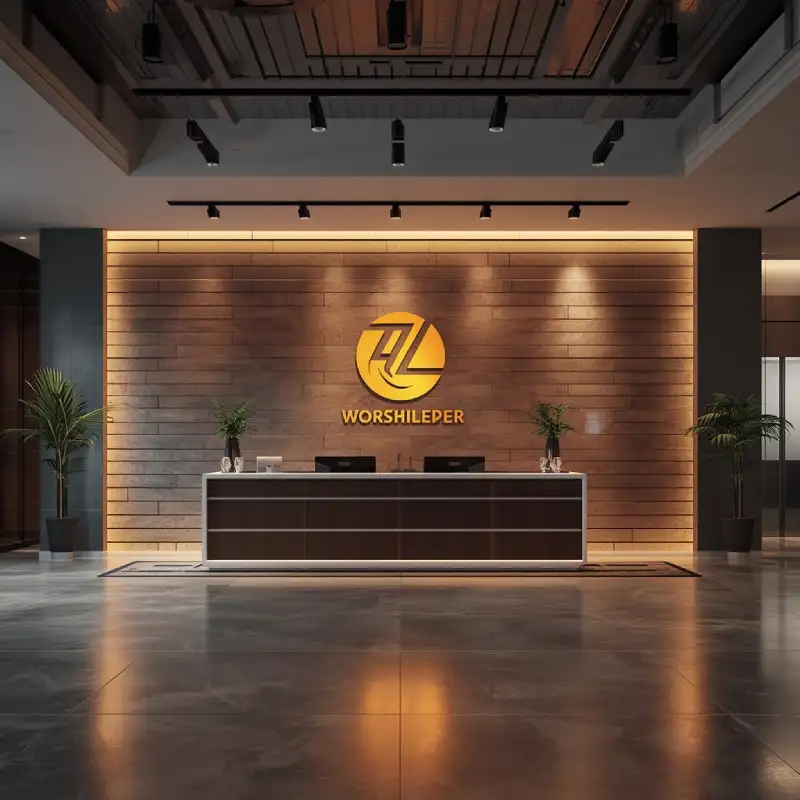
Interior wall graphics do for office space what window graphics do for the street: they turn a blank surface into a branded one, without the cost or downtime of construction.
Dimensional cut-vinyl lettering is the most common lobby application: a company name and logo cut from solid-color vinyl and applied directly to a wall, with no printed background. It reads as clean and permanent, which is why it's the default choice behind reception desks and at building entrances.
Full wall wraps and murals cover an entire wall, or several, with a printed graphic: a mission statement, a map of service areas, a photo mural, or a brand pattern. These work well in conference rooms, hallways, and break rooms where a company wants to reinforce culture or identity in spaces employees see every day, not just the spaces clients walk through.
Wayfinding graphics solve a practical problem in larger offices and multi-tenant buildings: directing visitors to suite numbers, departments, or restrooms using the same vinyl process as branding graphics, just with directional information instead of a logo.
Textured and specialty wall films mimic brick, wood grain, or fabric for interiors that want visual interest without a full remodel. These have become more common in office break rooms and collaborative spaces where a company wants a designed feel on a sign budget rather than a renovation budget.
The common thread across all of these: none of them require patching or repainting the wall underneath. A wall graphic removes cleanly (assuming the right vinyl and proper removal technique), which matters for tenants who don't own the building and for companies that rebrand every few years.
Material and Vinyl Options: Which Type Fits Your Space
Not all vinyl is built the same, and the difference matters more than most buyers expect going in.
Cast vinyl is manufactured as a thin, liquid film that's cast onto a sheet and cured, which makes it thinner, more flexible, and more dimensionally stable than calendered vinyl. It conforms to curves, rivets, and slightly textured walls without lifting at the edges, and it holds up longer in direct sun, which matters on the south- and west-facing glass common on North Texas storefronts. Premium cast films from manufacturers like 3M and Avery Dennison are the standard for any installation expected to last five or more years.
Calendered vinyl is manufactured by rolling and stretching, which makes it thicker and less flexible. It costs less and works fine for flat surfaces and shorter-term applications, like a seasonal promotion or a one- to two-year storefront graphic, but it's more prone to shrinking and edge-lifting over time, especially on curved surfaces or in extreme heat.
Lamination adds a protective layer over printed graphics, whether cast or calendered, and it's not optional for anything installed where it will see direct sunlight. Texas summers are hard on unprotected ink; UV exposure fades color and breaks down adhesive faster than in milder climates. A laminated printed graphic on a south-facing DFW storefront window will consistently outlast one that isn't.
Removable adhesive is worth specifying up front for leased spaces or graphics with a planned end date; the adhesive formula, not the vinyl itself, determines whether a wall or window graphic comes off clean or leaves residue and surface damage behind.
Cost Factors for Window and Wall Graphics in DFW
Pricing for window and wall graphics comes down to a handful of variables, and understanding them helps set a realistic budget before requesting quotes.
Square footage is the biggest driver: a single door decal and a twenty-foot storefront window wrap are the same process at a completely different scale, and material and labor both scale with size.
Vinyl grade matters as much as size. Cast vinyl with UV laminate costs more per square foot than uncoated calendered vinyl, but for anything facing direct sun or expected to last more than two years, the cost difference is usually smaller than the cost of an early replacement.
Design complexity affects both print and install time. A single-color logo cut in vinyl installs faster than a multi-panel, full-color printed mural that has to be seamed and aligned across several sheets.
Surface condition is the factor buyers most often miss. Removing old graphics, patching wall texture, or cleaning years of storefront grime off glass adds labor before the new graphic ever goes up, and it's much easier to price accurately with an in-person or photo-based site assessment than a phone estimate.
Because these variables shift the total so much project to project, a firm number really does require a walkthrough or detailed photos rather than a flat per-square-foot rate quoted sight unseen. That's the honest answer, and it's why most DFW sign companies, including ours, quote after seeing the space.
Design Tips: Making Window and Wall Graphics Work for Your Brand
A technically well-installed graphic can still fail if the design doesn't account for how and where people actually see it.
Keep storefront window graphics legible at drive-by speed: bold, high-contrast lettering reads from a car window; a detailed logo with fine print does not. If the window graphic needs to work for both foot traffic and passing cars, design for the harder case.
Leave sightlines for staff. Perforated vinyl is designed to be seen through from the inside, but full-coverage or heavily layered graphics can make a retail space feel closed off from the inside looking out. Walk the interior during the design proof, not just the exterior.
Match wall graphics to the room's actual function. A reception lobby logo can be large and simple; a wayfinding graphic needs enough contrast and font size to read from ten or fifteen feet away, in a hallway that may not be brightly lit.
Plan for maintenance from the start. A textured wall wrap in a high-traffic hallway will show scuffs faster than the same wrap in a private office; specifying a scuff-resistant laminate up front costs less than a mid-life replacement.
Finally, order both window and wall graphics from the same design file and vinyl family when they're part of one branding push. Color consistency between a storefront window and a lobby wall is easy to get right in the proof stage and hard to fix after two separate vendors have already printed.
Professional Installation: Why DIY Vinyl Often Fails
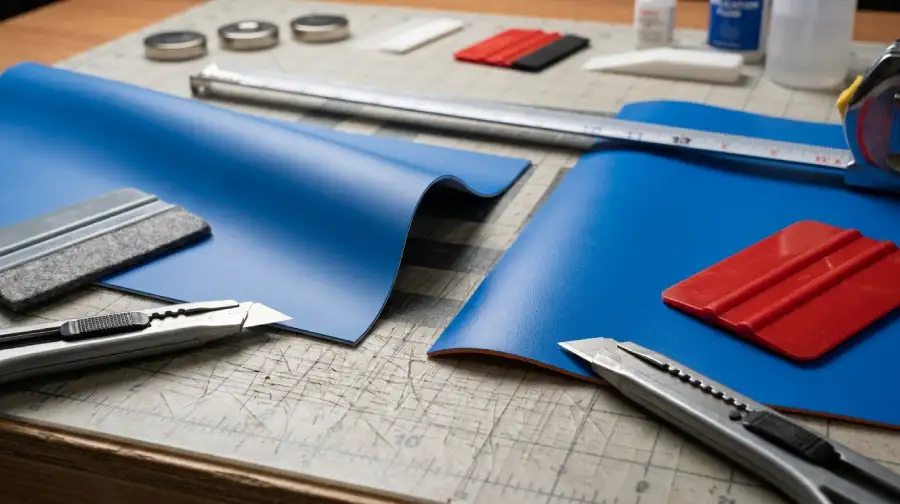
Vinyl graphics look simple to install and are genuinely difficult to install well, which is the gap where most DIY attempts run into trouble.
Air bubbles and silvering (the hazy look of trapped air under the vinyl surface) come from squeegee technique and surface prep, not from the vinyl itself. A wet-application method, correct surface cleaning, and the right squeegee angle prevent both, and getting all three right on a first attempt across a large window or wall is harder than it looks in a how-to video.
Seam alignment on multi-panel graphics, a full storefront window or a wide wall mural cut into printable-width panels, is where most self-installed jobs visibly fail. Panels need to be hung plumb and level with matched seams, which typically takes two people, a laser level, and practice most business owners don't have reason to have.
Surface prep is the step DIY installs skip most often. Old adhesive residue, dust, or a wall with slight texture variations will telegraph through a new graphic or cause it to lift within weeks, and cleaning that properly, sometimes involving a chemical adhesive remover and a full surface degrease, takes real time before the new vinyl ever comes out of the box.
A professional install crew brings the tools and the repetition that make these steps routine instead of a first attempt.
Choosing a DFW Window and Wall Graphics Partner
North Texas has enough vinyl and sign shops that the harder decision usually isn't finding one, it's finding one that handles both the small custom order and the full commercial installation without passing the job to a subcontractor partway through.
Elevated Exposure Signs and Graphics designs, prints, and installs window and wall graphics for storefronts and offices across Fort Worth, Dallas, and the surrounding cities, using the same in-house team for a single custom decal, a full storefront window package, or an office-wide interior branding rollout. That matters for consistency: one point of contact, one vinyl order, one crew accountable for both the print quality and the install.
We've handled everything from single-window retail storefronts to multi-suite office buildings that needed lobby branding, wayfinding, and privacy film across a dozen conference rooms in the same project. The projects that go smoothest are the ones where design, material selection, and install scheduling happen with one vendor from the first conversation, not split across a print shop and a separate installer.
If you're comparing vendors, ask directly whether the company installs its own work or subcontracts it out; the answer affects both accountability if something goes wrong and how well the finished product matches the proof you approved.
Frequently Asked Questions
How long do window and wall graphics last?
Cast vinyl with UV laminate typically lasts five to seven years on exterior windows and even longer on interior walls that don't face direct sunlight. Calendered vinyl without lamination usually lasts one to three years, especially on south- or west-facing storefront glass in North Texas.
Can window graphics be seen from both inside and outside?
Perforated window vinyl is specifically designed for this: the outside shows a full graphic while people inside see through the perforations with minimal visual obstruction. Frosted and full-coverage printed film, by contrast, block or heavily reduce visibility from both directions.
Do wall graphics damage the wall when removed?
Properly specified removable vinyl comes off clean without paint damage or adhesive residue, assuming the wall was painted and cured correctly before installation. Permanent-adhesive vinyl left in place for many years, or applied to unprimed drywall, is more likely to leave residue or pull paint on removal.
What's the difference between a sticker shop and a wall or window graphics installer?
A sticker shop typically focuses on smaller printed and cut vinyl items like labels, decals, and small signs, often without an installation crew for large-format work. A commercial vinyl graphics company uses the same printing and cutting process at a larger scale and adds the surface prep, panel alignment, and install expertise that storefront windows and full walls require.
How much do window and wall graphics cost?
Cost depends primarily on square footage, vinyl grade, and design complexity, so an accurate number requires a site walkthrough or detailed photos rather than a flat per-square-foot rate. A small single-window decal costs far less than a multi-panel storefront wrap or a full-wall interior mural, and material choice (cast versus calendered, laminated versus unlaminated) shifts the price further.
Can I get both custom stickers and a full storefront graphics package from the same company?
Most established sign and graphics companies handle both, since they use the same wide-format printers, vinyl stock, and design process for a small sticker run and a large storefront installation. Ordering both from one vendor also keeps colors and branding consistent across every piece.
Ready for Your Next DFW Window or Wall Graphics Project?
Whether you're weighing a full storefront window package, interior branding for a new office, or you started this search looking for a “sticker shop near me” and realized you need something bigger, the vinyl process is the same one our team runs every week across Fort Worth and Dallas. We'll walk the space (or review your photos), recommend the right vinyl grade for where the graphic lives, and handle design, printing, and installation as one project instead of three vendors. Get a free estimate to start with a specific number for your space, not a guess.
Written by the Elevated Exposure Signs and Graphics team, who design, print, and install window graphics, wall graphics, and full commercial signage packages for storefronts and offices across Fort Worth, Dallas, and the surrounding DFW area. Reach out for a walkthrough or a photo-based estimate on your next project.