



Temporary and Construction Site Signage: Materials, Permits and Best Practices in DFW
A coroplast sign zip tied to a chain link fence looks like a small decision, but the material, the placement and the permit status behind it are not interchangeable across a construction project. Coroplast (corrugated plastic) is the material most contractors reach for first on a DFW job site, and for good reason: it survives Texas sun and afternoon storms without the weight or the price tag of aluminum. Getting a job site signed correctly comes down to three things: matching the material to how long the sign has to last, understanding what Dallas or Fort Worth actually requires before a panel goes up, and keeping the signage current as the project moves from mobilization to close out. This guide walks through all three.
Choosing the Right Material for Job Site Signage
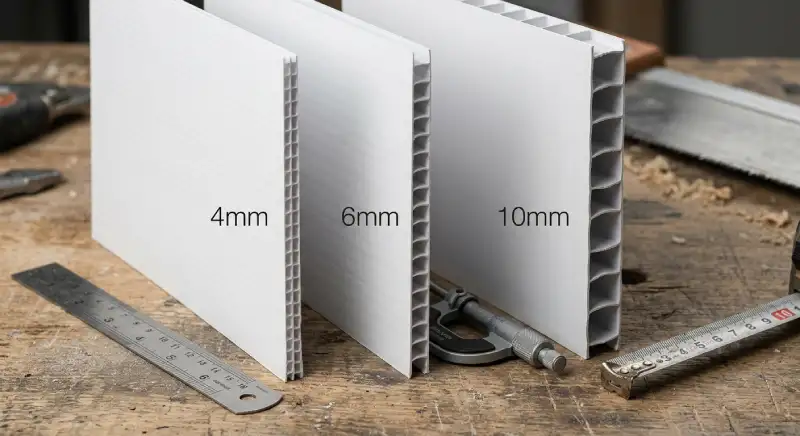
Coroplast is the workhorse of temporary site signage for a simple reason: it is light enough for one person to install with H-stakes, it takes full color printing on one or both sides, and it will not rot, rust or delaminate the way cardboard or uncoated wood signage does after a few weeks outside. The variable that actually decides whether a sign holds up is thickness, not the material name on the invoice.
Matching Material to How Long the Sign Needs to Last
4mm coroplast is built for a signage run of a few weeks: directional arrows, "no trespassing" notices, subcontractor parking signs. It does the job and gets replaced cheaply if the layout changes. 6mm holds up on a fence line where wind load is a real factor, which covers most perimeter and safety signage on an active site. 10mm is the choice for anything expected to stay up through an entire build cycle, like a project identification board listing the owner, architect and general contractor, because it resists the flex and edge cracking that thinner panels develop after months in direct sun.
Matching Material to Site Conditions
Site conditions matter as much as the calendar. A downtown lot boxed in by high rises creates wind tunnels that a suburban site never sees, and dust from heavy equipment settles into laminate over time and dulls the print faster than UV exposure alone. For perimeter fencing, printed mesh screens are usually a better call than solid banners: mesh lets wind pass through instead of catching it, which matters through a DFW spring storm season when a solid panel can act like a sail and pull the fence ties loose. When a sign has to survive the full length of a commercial build and double as a safety or code notice, aluminum or PVC is worth the extra cost, since neither degrades under UV the way coroplast eventually does once it passes the twelve month mark.
Permits and Regulations for Temporary Construction Signage in DFW
Permanent business signage in Dallas and Fort Worth goes through a fairly well documented review process. Temporary construction signage sits in a different, less clearly marked lane, and that gap is where most compliance problems start. Confirming the rules before the crew mobilizes is far cheaper than relocating a sign, or replacing one, after a city inspector flags it.
What Triggers a Permit in Dallas
Dallas generally requires a standalone sign permit when a sign exceeds 20 square feet in area, stands taller than eight feet, includes illumination or electrical components, or sits within or over the public right of way. A standard 18x24 or 24x36 coroplast panel, the size most job site directional and safety signs use, usually falls under those thresholds and does not need its own permit. Larger items commonly used on active construction sites (mesh fence screens that wrap a full block of perimeter fencing, elevated project identification boards, or anything with lighting for nighttime visibility) are a different story and should be confirmed with the city before fabrication.
What Fort Worth Looks At
Fort Worth reviews signage against zoning district rules rather than a single citywide size table, which means the answer for a specific site depends on where the property sits and what the surrounding district allows. The safer approach on a Fort Worth job is to treat any sign attached to the building itself, or anything illuminated, as something to confirm with the city, while smaller ground mounted directional and safety panels in the active work zone typically move forward without a separate review.
The Right of Way Rule Contractors Miss Most Often
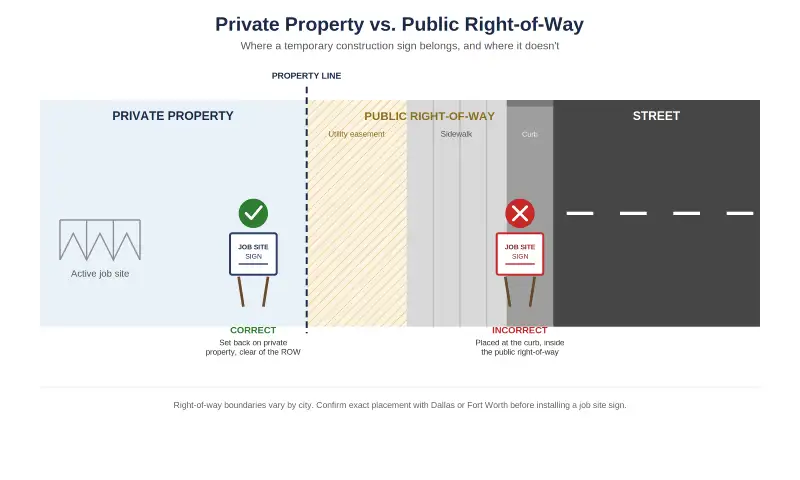
The rule contractors miss most often has nothing to do with size, it's placement. Both cities restrict what can go up within the public right of way, the strip of land between the property line and the street that includes sidewalks, curb lanes and utility easements. A directional sign staked a few feet too close to the curb, or a banner zip tied to a utility pole, can trigger a removal order even when the sign itself would never have needed a permit sitting a few feet further back on private property. Confirming the property line before signs go up, not after a complaint comes in, avoids the rework.
Duration Limits and Taking Signage Down
Temporary signage carries an expectation that it comes down when the job does. Some municipal permits for job site signage are tied directly to the active building permit and expire with it, while others carry their own display window measured in days. Either way, a sign left up after a certificate of occupancy is issued, or after a residential build closes, is one of the more common triggers for a compliance complaint on an otherwise clean project. Building removal into the closeout checklist, alongside the punch list and the final inspection, keeps this from becoming an afterthought.
Planning Signage Into the Project Schedule
Our founder's background is in city and regional planning, and that shows up most in how we think about the permit side of job site signage: treat the sign plan as part of the project schedule, not something to solve after the panels are already printed. For residential developments inside an HOA or a platted subdivision, add one more check to the list, since deed restrictions can limit temporary signage independently of what the city itself allows, particularly for real estate and marketing panels near model homes.
Best Practices for Installing and Maintaining Job Site Signs
Placement That Keeps the Site Safe and Legible
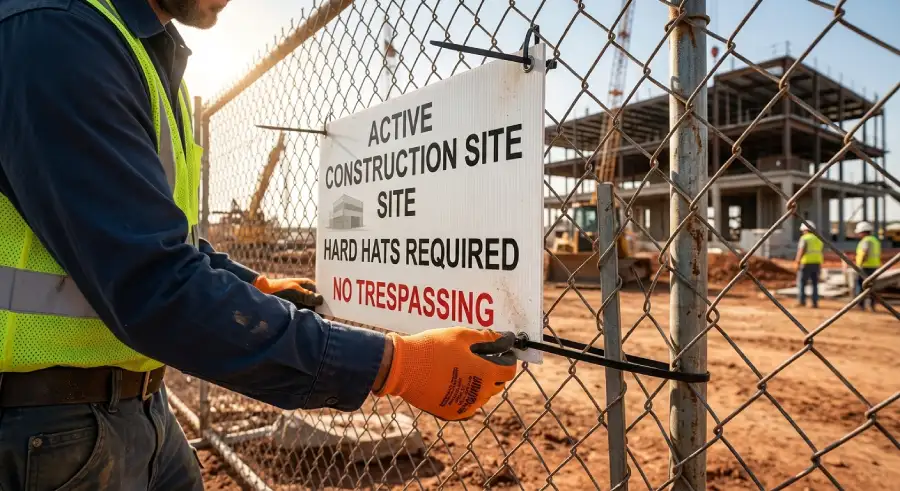
Job site signage has two jobs at once: keep people safe and keep the project legible to anyone walking or driving past. That means keeping directional and hazard signage clear of sightlines at entrances and gate turns, not blocking a sidewalk or an ADA accessible path with a freestanding panel, and placing safety notices where a visitor actually has to see them before entering an active work zone rather than wherever there happened to be an open fence post.
Mounting for Texas Wind
DFW wind is the reason more job site signs fail from the mounting hardware than from the material itself. H-stakes work for lightweight 4mm panels in soft ground, but a 6mm or 10mm panel on a fence line needs zip ties rated for outdoor UV exposure and enough tie points that the panel can't work loose after a few weeks of gusts. For anything freestanding near a roadway or an active equipment path, a weighted frame beats a single stake pair every time a storm rolls through.
Keeping Signage Current Through Every Phase
A signage set that made sense at mobilization rarely fits the project six months later. Early phase signage is mostly safety and directional. Mid build, project identification and subcontractor signage take over. Close to completion, real estate or leasing panels often go up before the last permanent monument or building sign is installed. Keeping the same artwork file on hand for reorders, something we build into every job from day one, makes swapping a panel a phone call instead of a new design job every time the site changes.
Frequently Asked Questions
What is the best material for temporary construction signs in DFW?
Coroplast is the standard choice for most job site signage because it is light, weatherproof and inexpensive to reprint as a project changes phase. Choose 4mm for short runs under a month, 6mm for fence mounted signage exposed to wind, and 10mm or aluminum for anything that needs to last a full build cycle.
Do you need a permit for a construction site sign in Dallas or Fort Worth?
It depends on the size, placement and how long the sign will be up. A standard coroplast directional or safety panel usually falls under the size thresholds that require a standalone permit in Dallas, while larger fence screens, elevated project boards or anything illuminated typically need confirmation with the city first.
Can a construction sign be placed in the street right of way?
Generally no. Both Dallas and Fort Worth restrict signage within the right of way, which includes the strip of land between the property line and the street. Confirming the exact property line before staking signage avoids a removal order later.
How long can a temporary construction sign stay up?
Most temporary sign permits are tied to the active building permit and expire when it does, though some carry their own separate display window. Removing job site signage should be part of the project closeout checklist, alongside the final inspection.
How thick should coroplast be for a job site sign?
4mm works for short term signs under a month, 6mm is the standard for fence mounted signage exposed to ongoing wind, and 10mm holds up best for anything expected to stay up for the full length of a commercial build.
What happens if a construction site sign doesn't have a required permit?
An unpermitted sign that should have had one can be flagged for removal by the city, which usually costs more in delay and reinstallation than pulling the permit would have up front.